



Retailers and wholesalers can save 15 to 20% by smartly utilising bulk purchases of surplus stock. This strategy offers a unique opportunity to increase profit margins, despite common misconceptions about quality and risks. In this article, you will learn how to bulk purchase, the benefits it offers, how to manage risks, and the practical steps you can take to optimise your purchasing strategy.
| Punt | Details |
|---|---|
| Cost savings | Buying in bulk leads to significant savings through economies of scale and volume discounts. |
| Quality control | Careful supplier research and trial orders effectively minimise defect risks. |
| Logistics Planning | Adequate storage capacity and distribution strategies prevent bottlenecks with large volumes. |
| Misconceptions | Many companies miss opportunities due to incorrect assumptions about excess stock. |
| Practical Approach | Collaboration with specialists such as Kooistra.com makes bulk purchases directly accessible. |
Bulk purchasing is the acquisition of large quantities of products at reduced prices per unit. This fundamentally differs from regular purchasing, where you order small volumes at standard rates. The basic concept revolves around economies of scale: the more you buy, the lower the price per item.
Excess stock arises when suppliers, manufacturers, or retailers have more products in stock than they can sell. This happens due to seasonal surpluses, packaging changes, stock over-ordering, or returns. These products are often brand new and usable but need to be sold quickly to save on warehousing costs.
The mechanism is simple: wholesalers such as Kooistra.com buy in bulk running stock Direct from manufacturers or distributors. Due to the volume, they can negotiate significant discounts. Bulk purchasing of surplus stock takes advantage of economies of scale and volume discounts., which is passed on to retailers and wholesalers. You benefit from lower purchasing costs without the complexity of direct manufacturer contact.
Practical examples demonstrate this clearly. A clothing store can buy seasonal surpluses for 40 to 50% below the regular wholesale price. An electronics webshop obtains Returned goods which, on inspection, turn out to be perfectly marketable. A junk buyer resells these goods to smaller retailers with a profit margin.
Important features of bulk purchasing:
The financial advantages are the most attractive aspect. By purchasing larger volumes, your cost per unit drops dramatically. A product that normally costs €10 can fall to €6 or €7 with bulk purchasing. This saving translates directly into higher profit margins or more competitive selling prices.
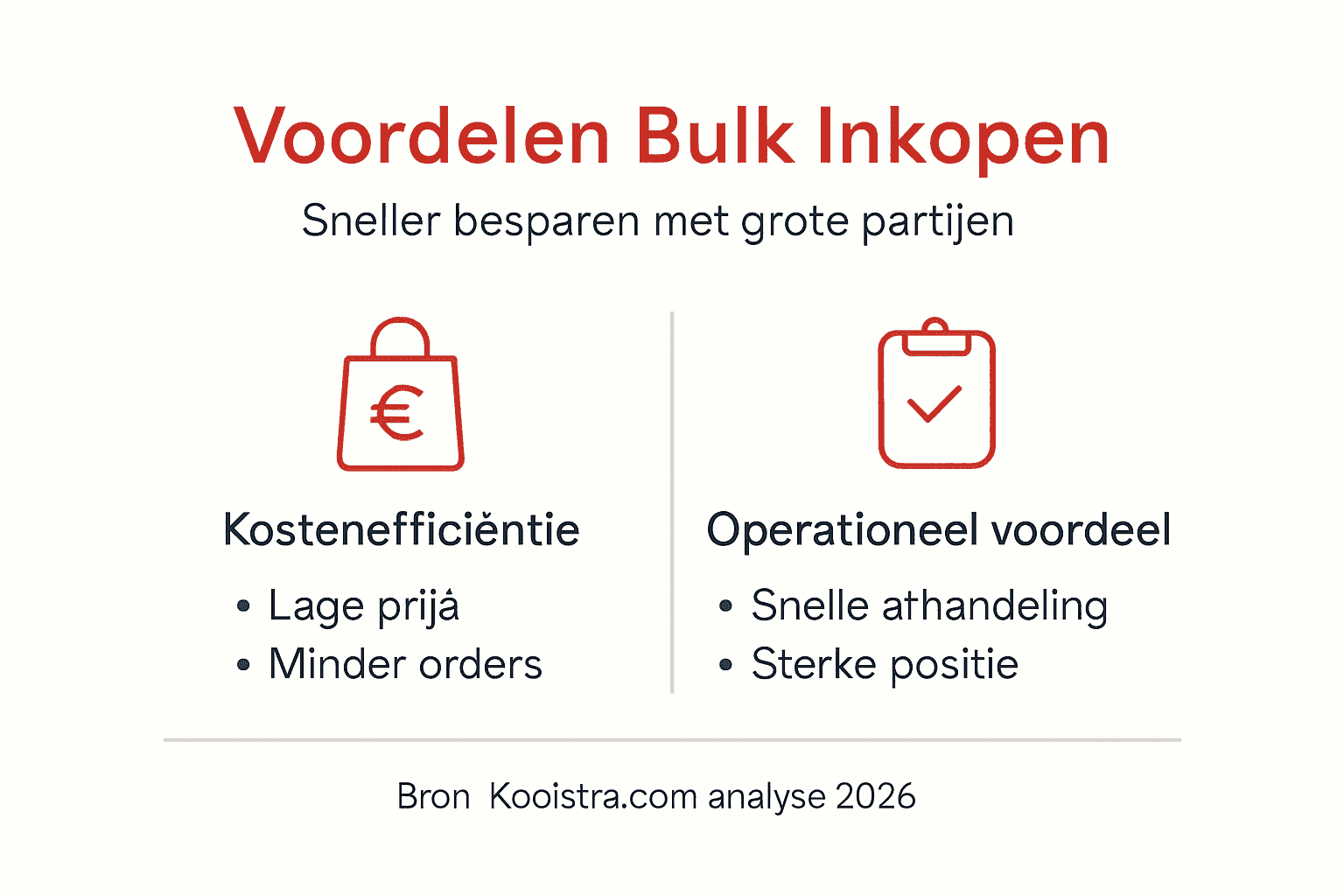
Procurement cycles are significantly accelerated. Instead of multiple small orders per month, you arrange for weeks or months of stock with a single bulk transaction. Buying in bulk shortens procurement cycles and increases revenue flexibility by 15 to 25%. This saves administrative time and reduces transaction costs. Your inventory management becomes more flexible because you are less reliant on frequent deliveries.
Your negotiating position improves substantially. Suppliers value buyers who purchase large volumes and are willing to offer better terms. Think of longer payment terms, free transport, or preferential treatment for new stock. These advantages accumulate over multiple transactions.
Cash flow optimisation is another significant advantage. Lower procurement costs leave you with more working capital for marketing, staffing costs, or other investments. The faster turnover of well-priced inventory ensures consistent cash flows. Companies that purchase smartly can improve their Return costs compensate through more efficient stock management.
Key benefits at a glance:
Pro tip: Combine bulk purchases with regular analysis of your stock rotation. Quickly identify fast-moving products and focus your bulk purchases on them. This way, you maximise revenue while minimising stock risks.
Variable quality is the biggest risk with excess stock. Not all batches have been equally approved or stored. Some products may have cosmetic damage, outdated packaging, or missing accessories. Without inspection, you run the risk of purchasing unsaleable defective goods.
The financial impact of quality issues can be significant. Defective products generate complaints, returns, and negative reviews. This not only costs money in refunds but also damages your reputation. Companies without quality control lose an average of 8 to 12% of their bulk purchase value in unsaleable items.
Best practices start with trial orders. Order a small batch first to assess quality, packaging, and documentation. This small investment protects you from larger losses later. Quality control and trial orders limit defect costs and returns when bulk purchasing excess stock. Reliable suppliers welcome this approach as it builds trust.
Implement standard quality inspections. Check products for functionality, completeness, and condition on a random sampling basis. Document findings and communicate transparently with your supplier. Serious partners such as Kooistra.com are open to feedback and resolve issues quickly. Certification of returned goods by reputable parties offers added reassurance.
Essential quality measures
Pro tip: Implement a standard quality screening process before every bulk purchase. Create a checklist with minimum acceptance criteria and reject batches that score below it. This discipline prevents costly mistakes.
Thorough supplier research is fundamental to successful bulk purchasing. Not all suppliers of surplus stock operate with the same integrity or quality standards. A structured comparison will save you money and prevent disappointment. Systematic supplier research can deliver price reductions of up to 15% when buying in bulk.
Essential selection criteria include price, quality, flexibility, and experience. Price is important, but not the only factor. A slightly more expensive supplier with consistent quality and reliable delivery will ultimately save you more than the cheapest option with quality issues. Thoroughly evaluate track records, customer testimonials, and online reviews.
Benchmarking techniques significantly strengthen your negotiation position. Gather quotes from at least three to five suppliers for comparable batches. Analyse not only prices but also payment terms, transport costs, and guarantees. This transparency forces suppliers to price more competitively.
The impact of benchmarking on cost savings is measurable:
| Benchmarking Approach | Average Price Reduction | Time Investment |
|---|---|---|
| No comparison | 0% | 00:00 |
| Basis comparison (2 suppliers) | 8 to 12% | 2 to 3 hours |
| In-depth analysis (4+ suppliers) | 15 to 20% | 5 to 8 hours |
| Annual partner contracts | 20 to 25% | 15 to 20 hours initially |
Successful buyers invest time in relationship management. Visit showrooms, trade fairs, and events where suppliers showcase their stock. Personal contact builds trust and gives you priority access to new, attractive deals. Kooistra.com organises regular warehouse sales where you can inspect and negotiate directly.
Key selection factors:
Logistical complexity increases exponentially with voluminous bulk purchases. A pallet of 500 products requires different handling than five loose boxes. Transportation, storage, and distribution must be coordinated to prevent damage and delays. Good logistical planning prevents bottlenecks on the storage and distribution of bulk supplies.

Storage capacity is a critical success factor. Check that your warehouse has sufficient space for the purchased volumes. Calculate not only floor space but also stacking height and accessibility. Products must remain accessible for order picking. Consider temporary external storage for occasional large batches.
Product-focused organisation optimises your stock efficiency. Group fast-moving items near shipping locations. Place seasonal or slow-moving stock deeper in the warehouse. This speeds up order processing times and reduces labour costs. Modern Stock management systems automate this process.
Risk management for diverse product types prevents value loss. Temperature-sensitive items require climate control. Fragile products need protective packaging. Electronic goods must be stored dry and dust-free. Each product category has specific requirements that must be accommodated.
Distribution strategies determine your lead time from receipt to sale. Develop efficient picking routes and packaging processes. Invest in barcode scanners and inventory management software for real-time visibility. Some companies use logistics audits to identify bottlenecks and optimise processes.
Essential logistics considerations:
Many retailers and wholesalers are missing opportunities due to incorrect assumptions about bulk purchasing. These misconceptions unnecessarily limit their competitiveness and profitability. Let's debunk the four most persistent myths.
Bulk purchasing is only advantageous when it comes to new stock. Excess inventory and returned goods often offer better margins than new products. Manufacturers and retailers want to sell this stock quickly and accept lower prices. After quality control, these items are perfectly marketable at regular consumer prices. The difference between your purchase price and selling price is your profit.
Quality issues are inevitable with excess stock. Professional traders like Kooistra.com inspecting batches in advance and offering transparency about product condition. Much excess stock consists of seasonal overruns or packaging changes, not defective products. With trial orders and inspection protocols, you can effectively manage quality.
Buying in bulk always increases the risk of overstock. This only happens with poor stock management or impulse purchases. Analyse your sales data and focus on fast-moving products. Only buy volumes that you can sell within three to six months. Diversification across multiple product categories spreads risks.
Overstock lots are by definition outdated or unusable. Most surplus stock is recent and market-appropriate. Retailers clear out warehouses for new collections, not because products are worthless. Electronics, household goods, and clothing from last season still sell excellently. Consumers often see no difference from the latest models.
Collaboration with specialised overstock wholesalers like Kooistra.com is the fastest route to successful bulk purchasing. These parties have extensive networks, quality control processes, and logistical expertise. They take away a lot of complexity and offer access to stock that is otherwise difficult to find. Start with remaining batches which connect to your current range.
Cashflow management is crucial for sustainable bulk purchasing. Large inventory purchases tie up capital that is temporarily unavailable for other purposes. Calculate how much working capital you can comfortably invest without operational problems. Monitor your inventory turnover rate weekly and adjust purchasing volumes when sales decline.
Legal and contractual obligations vary by product category and country. Please check warranty terms, return rights, and product liability before purchasing large quantities. Legal rules Bulk purchasing differs from regular B2B transactions. Have contracts exceeding €10,000 reviewed by a solicitor specialising in commercial law.
Step-by-step plan for successful implementation:
Regular evaluation continually optimises your purchasing strategy. Compare actual sales with forecasts by product category. Identify which batches sold faster than expected and which lagged behind. Use these insights to refine future purchases. Successful companies review their bulk purchasing strategy quarterly and adapt based on market trends.
Key implementation factors:
Kooistra.com Supports companies with slow-moving stock through personal advice, flexible payment terms, and continuous stock replenishment. Their experience since 1979 translates into practical solutions for various trading situations.
You now understand how bulk purchasing of surplus stock reduces your costs and increases profit margins. The next step is concrete action with a reliable partner. Kooistra.com offers an extensive range of clearance stock specially selected for retailers and wholesalers.
Our team of specialists helps you find the right suppliers that align with your business model. With 15,000 m² of warehouse space and over 45 years of experience, we understand the challenges of inventory management and procurement optimisation. Whether you are interested in mixed pallets For a varied assortment or specific product categories, we'll help you think it through.
Start shopping smarter today. Explore our online platform, visit our showroom, or contact us for personal advice. We help you turn unsellable stock into profitable sales. Your competitors are already benefitting, why aren't you?
Always begin with a small trial order to assess product quality, packaging, and documentation. Conduct physical inspections on a sample basis, checking functionality, completeness, and cosmetic condition. Work with suppliers who are transparent about product origin and willing to resolve quality issues.
The direct price advantages range from 15 to 40% per product compared to regular wholesale prices. Additionally, you save on transaction costs through less frequent orders, administrative time, and transport costs per unit. These savings translate directly into higher profit margins or more competitive selling prices.
Analyse your sales data thoroughly and only purchase volumes that you can sell within three to six months. Focus on fast-moving products with proven demand. Diversify across multiple product categories to spread risk and monitor your inventory turnover rate weekly to make timely adjustments.
Warranty terms vary by supplier and product category. Serious partners such as Kooistra.com provide transparency on product condition and return options for serious quality issues. Always inquire about specific guarantees in advance and record agreements in writing in your purchase contract.
Kooistra.com acts as a specialised intermediary between manufacturers, retailers with overstock and your company. We select, approve and aggregate large batches of surplus stock that are otherwise difficult to access. With over 45 years of experience, we offer not only products but also expertise in quality control, logistics and market insight that simplifies your purchasing process.

After evaluating your offer, you will receive an immediate offer. We are flexible and proceed quickly. Bid - Pay - Collect.

We are the partner for reselling batches of goods outside your own sales market.

We are financially sound and we have the capacity to buy up sizeable consignments of goods.

We buy the whole lot and make no selection here. Large, small and mixed lots. We buy everything in the field of consumer goods!


