


✓ Free shipping in NL from €500,-
✓ Buying stocklots since 1979
A stock buyer helps you get rid of excess stock quickly. Need warehouse space or want to free up cash quickly? A stock buyer will buy your stock in one go - often within days, without any hassle. At Kooistra.com, we even arrange this within 24 hours.

In short: “Inkopen” is typically translated into English as “purchasing” (formal business), “procurement” (strategic), or “buying” (general). For wholesale and B2B contexts, you would use “wholesale purchasing” or “bulk procurement”. Dutch companies that purchase internationally need to master these terms to communicate effectively with suppliers in Germany, the UK, or Asia. This article explains which English translation is appropriate when, including examples from the general goods trade.
Dutch entrepreneurs doing business internationally often encounter translation challenges. Precise terminology is crucial, especially when purchasing goods: a wrong term can lead to miscommunication with suppliers. Whether you To buy books with British publishers, Buying second-hand clothes at German sorting companies or shopping Germany Organises for your wholesale — the correct English term can make the difference between a smooth transaction and costly misunderstandings.
“Inkopen” translates depending on the context: purchasing for formal business procurement, Procurement for strategic procurement with contracts and supplier relationships, Purchasing for general purchases, and shopping for consumers doing their shopping.
According to Office for National Statistics handles 68% from Dutch wholesalers with foreign suppliers, where English is the lingua franca. The context determines your word choice: a purchasing manager sends a “purchasing order,” not a “shopping order.” In contracts with German or Chinese suppliers, you often see “procurement agreement” for long-term arrangements.
At Kooistra, we work with international terminology daily. When we purchasing leftover stock via Kooistra, We communicate with suppliers from all over Europe in business English. For batch goods, we use specific terms such as “overstock purchasing” or “liquidation procurement”.
In business correspondence you use purchasing for the procurement process, Procurement for strategic procurement including supplier selection, Sourcing for searching for suppliers, and acquisition for the acquisition of large batches or company assets.
Practical examples from wholesale:
According to the trade journal RetailTrends is the European market for overstock trading growing by 12% per year, with English terminology having become the standard — even in German-Dutch transactions.
“Inkopen” (purchasing/procurement) implies a professional, often repeated process for a company. “Aankopen” (buying/purchasing) is more neutral and applies to both one-off and corporate transactions. In English, the difference is subtle: “procurement” sounds more strategic than “buying”.
For specific sectors:
Dutch companies that purchase in Germany often use hybrid terminology. For cross-border transactions, it is essential to inform your supplier about “incoterms” (international trade terms) such as EXW (Ex Works) or DDP (Delivered Duty Paid).
We are interested in purchasing… Could you provide a quote for…? We would like to procure… What are your terms for bulk orders?.
Practical examples from Kooistra:
When you want to purchase international part loads, clear communication is essential. Kooistra buying and selling We work daily with English-speaking suppliers and can advise on the correct wording.
Dutch entrepreneurs often mistranslate “inkopen doen” as “do purchases” (which is literal but unnatural). The correct translations are “make purchases,” “do the purchasing,” or simply “buy.” Mistranslating “inkoop” as “income” is also a classic error – it should be “purchasing” or “procurement.”.
Other common translation errors:
These nuances may seem minor, but they influence your professional image with international suppliers. Especially in large transactions — such as purchasing complete remainder lots or liquidation stock — precise terminology is crucial for contract negotiations.
Whether you want to purchase books, clothing or other bulk goods internationally, the correct English terminology is essential. Use “purchasing” for formal business buying, “procurement” for strategic supplier relationships, and “sourcing” when you are actively looking for new suppliers. Avoid literal translations and opt for natural business English.
Kooistra has 45 years of experience in the international procurement of batch goods, remaining stock, and liquidation inventories. We work daily with suppliers from Germany, the UK, and other European countries. Browse our current offer of batch goods Contact us for advice on international procurement projects.
—
**META DESCRIPTION:** Buying in English? Learn to use purchasing, procurement and sourcing correctly for B2B trade, books, clothing and Germany procurement. (147 characters)
Purchasing is the tactical procurement process: placing orders and handling transactions. Procurement is more strategic and encompasses supplier selection, contract negotiations, and risk management. For wholesalers like Kooistra.com, procurement is more relevant for structural purchases of batch goods, while purchasing applies to individual orders. In international B2B communication, you demonstrate more strategic insight with procurement.
‘Purchasing party goods’ translates as ‘bulk purchasing’, ‘wholesale buying’ or ‘lot procurement’. For residual batches, you use ‘surplus stock purchasing’ or ‘liquidation buying’. Kooistra.com uses these terms with international suppliers. In Germany and the UK, ‘wholesale procurement of job lots’ is common. This terminology ensures clear communication about large quantities at competitive prices.
Essential terms include: MOQ (Minimum Order Quantity), lead time, FOB (Free On Board), payment terms, and supplier agreement. For wholesale businesses, ‘bulk discount’, ‘wholesale price’, and ‘stock clearance’ are crucial. Kooistra.com uses this terminology daily in international procurement. Mastering it prevents misunderstandings and strengthens your negotiation position with foreign suppliers.
Wholesale purchasing is the procurement of large quantities of goods directly from manufacturers or distributors for resale. You buy at wholesale prices, significantly lower than retail prices. Kooistra.com specialises in wholesale purchasing of clearance stock and remaindered goods. This purchasing method often requires minimum order quantities but offers substantial cost advantages. Ideal for retailers, webshops, and resellers looking to optimise margins.
Use formal business language: ‘We are interested in procuring…’ instead of ‘We want to buy…’. Always specify quantities, specifications and delivery terms. Ask for ‘quotations’, not ‘prices’. Confirm agreements in writing with ‘As per our discussion…’. Kooistra.com advises clear purchase orders with all conditions. Professional communication builds trust and prevents costly misunderstandings in international transactions.
Offer your goods over the phone, directly to our buyer. In many cases, you will receive an offer immediately!
Easily append your offer via WhatsApp and receive an offer quickly!
Send your offer by e-mail to inkoop@kooistra.com Do you want to send large files? Then use Wetransfer.com
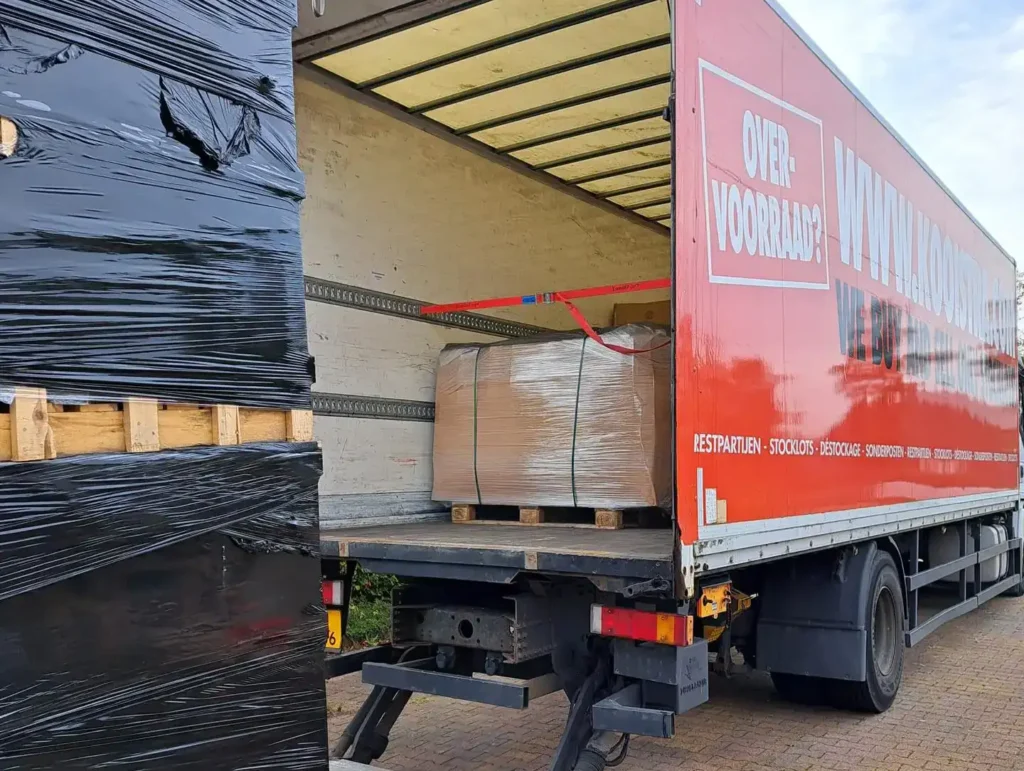
Do you have (remaining) lots, returns or collections that are no longer selling well? Want to clear out your warehouse or have goods with old packaging? We will gladly buy them up! As an experienced B2B buyer, we work quickly and easily. Send your offer via our form, and we will respond within one working day. Upon agreement, we pay in advance and arrange transport ourselves. It's that simple to do business with us!

After evaluating your offer, you will receive an immediate offer. We are flexible and proceed quickly. Bid - Pay - Collect.

We are the partner for reselling batches of goods outside your own sales market.

We are financially sound and we have the capacity to buy up sizeable consignments of goods.

We buy the whole lot and make no selection here. Large, small and mixed lots. We buy everything in the field of consumer goods!
From returns, b-choice items, bankruptcy lots, other redundant stock, as well as shop stocks and inventories!
*We buy no private items, 2nd hand and household goods
Offer the goods easily, and we will come up with a fair offer within 24 hours
We buy everything at once, pay the invoice immediately and collect the lot ASAP.

UITSTEKENDTrustindex verifieert dat de oorspronkelijke bron van de recensie Google is. Al meerdere keren bij Kooistra besteld en elke keer perfect geregeld. Top service, snelle reacties en snelle verzending. Duidelijke en transparante communicatie. Absoluut een aanrader!Geplaatst opTrustindex verifieert dat de oorspronkelijke bron van de recensie Google is. Ik kom er al jaren Prima handel voor Zeer goede prijs En altijd goed geholpenGeplaatst opTrustindex verifieert dat de oorspronkelijke bron van de recensie Google is. snelle verzendingGeplaatst opTrustindex verifieert dat de oorspronkelijke bron van de recensie Google is. Ik ben zeer goed geholpen bij Kooistra, hier kunnen andere bedrijven nog een voorbeeld van zijn. Van begin tot en met de levering alles prima geregeld. Ik ben in ieder geval zeer tevreden over Kooistra.Geplaatst opTrustindex verifieert dat de oorspronkelijke bron van de recensie Google is. Info via de app vlot verkregen, bestelling via de site gedaan en keurig op tijd afgeleverd.Geplaatst opTrustindex verifieert dat de oorspronkelijke bron van de recensie Google is. Uitmuntende communicatie, super kwaliteit en alles volgens afspraak geleverd. Kunnen veel bedrijven een voorbeeld aan nemen.Geplaatst opTrustindex verifieert dat de oorspronkelijke bron van de recensie Google is. Erg tevreden. Betalen vlot de facturen en houden zich aan de afspraken.Geplaatst opTrustindex verifieert dat de oorspronkelijke bron van de recensie Google is. Çok büyük bir şirket ciddi operasyonlar yapıyorlarGeplaatst opTrustindex verifieert dat de oorspronkelijke bron van de recensie Google is. Altijd zeer fijn om te werken met Kooistra, zowel met het aan- als verkopen van goederen. Een betrouwbare partij die altijd zijn afspraken nakomt.

Min. order for shipping & pick up: €150
We are happy to help!