


✓ Free shipping in NL from €500,-
✓ Buying stocklots since 1979
A stock buyer helps you get rid of excess stock quickly. Need warehouse space or want to free up cash quickly? A stock buyer will buy your stock in one go - often within days, without any hassle. At Kooistra.com, we even arrange this within 24 hours.

In short: A wholesaler sells products in large volumes to businesses, not to consumers. From food and non-food to specialised niches such as wholesale pedicures or bead wholesale: wholesalers offer competitive prices through bulk purchasing. Kooistra.com focuses on bulk goods and clearance lots in fashion, home, garden and care — ideal for retailers who want to buy smart at low prices.
The wholesale trade forms the link between producers and retailers. Whether you run a hospitality business, are starting a clothing shop, or operate a beauty salon: wholesalers provide access to stock that remains unattainable for end consumers. In the Netherlands, according to the CBS Over 60,000 companies with a combined turnover of more than €400 billion. This article explains how wholesalers operate, what types there are, and how you as a professional can benefit optimally.
A wholesaler is a business that purchases goods for its own account from manufacturers or importers and resells them to business customers such as shops, catering establishments, or service providers. They deal in bulk volumes and never sell directly to end consumers. Their business model is based on small margins on large volumes.
Wholesalers perform four core functions: stockholding (so retailers don't have to store themselves), assortment building (bundling products from different suppliers), logistics (delivering to customers), and risk coverage (they bear the stock risk). In practice, this means a baker can go to a wholesale foodservice supplier like Sligro or Makro for everything from flour to packaging materials, without having to negotiate with dozens of suppliers themselves.
Besides general wholesalers, there are specialised niches, from pedicure wholesale (with professional nail care and treatment products) up to Beads wholesale for hobbyists and jewellers. This specialisation ensures expert knowledge and deeper stock levels within specific product groups.
The Netherlands has three main categories of wholesalers: food wholesalers (fresh, shelf-stable, beverages), non-food wholesalers (clothing, electronics, furniture), and cash-and-carry formats where customers collect goods themselves. In addition, there are online B2B platforms and specialist parties such as clearance traders.
Food wholesalers dominate the hospitality industry: according to CBS figures gaat 65% van alle horecabestellingen via gespecialiseerde food-groothandels. Non-food is diverser: van bouwmaterialen tot cosmetica. Wholesale clothing divides itself again into segments such as wholesalers for fashion brands, stocklots (overproduction), and clearance lots.
At Kooistra.com, the focus is on party goods and clearance stock: overstock, liquidation stock, and seasonal surplus in home, fashion, garden, and personal care. This offers retailers opportunities to goods at 40-70% below normal wholesale price to hit in.
To purchase professionally from wholesalers, you typically require a VAT number or Chamber of Commerce registration. You register as a business customer, gain access to B2B prices, and order minimum purchase volumes. Payment is often made via invoice with payment terms of 14-30 days.
Most wholesalers have minimum order values (€100-€500) or quantities per item. Cash-and-carry models like Makro have lower thresholds but charge no delivery fees — you collect yourself. Online B2B platforms often offer dropshipping: the wholesaler ships directly to your customer without you needing to hold stock.
For those starting out in retail, it pays to compare multiple wholesalers. Don't just look at price but also at reliability of delivery, returns policy, and payment terms. At Kooistra.com you will find Buying clearance stock at sharp prices Ideal for testing assortments without major investment.
Groothandels bieden schaalvoordelen: door bulk in te kopen betaal je 40-60% minder dan consumentenprijzen. Daarnaast bespaar je tijd doordat één leverancier een breed assortiment levert. Professionele groothandels garanderen constante kwaliteit en betrouwbare levertijden.
Another advantage is specialist knowledge: specialised wholesalers such as a meadow wholesale (specialising in household goods) advise on trends, margins and seasonal buying strategies. They share insights from their network of hundreds of retailers.
Wholesalers of residual stock, such as Kooistra, offer additional benefits: exceptionally low prices (up to 80% below retail), unique products that are no longer regularly available, and opportunities for differentiation. Consumers are consciously seeking out outlets and charity shops — bulk goods fit perfectly with this demand for sustainable shopping at competitive prices.
Wholesalers form the backbone of retail and the hospitality sector in the Netherlands. Whether you opt for general food wholesalers, specialised niches such as pedicure wholesale or Beads wholesale, or specifically for party goods: smart purchasing begins with finding the right partner. For retailers looking to differentiate themselves with competitive prices and unique products, Kooistra.com has been offering high-quality remaining stock and overstock in fashion, home, garden, and care since 1979. Contact and discover how party goods increase your margin.
**META:** Wholesale Guide: From Food to Clothing Wholesale, Pedicure Supplies and Beads. Learn to buy smart from B2B suppliers and benefit from bulk goods at competitive prices.
A wholesaler sells products in large volumes to businesses, not to consumers. They buy directly from manufacturers and offer competitive prices through bulk purchasing. Wholesalers form the link between manufacturers and retailers. Kooistra.com specialises in clearance stock and bulk lots for fashion, home, garden and personal care, enabling retailers to make smart purchases at low prices.
Purchasing from a wholesaler offers significant cost savings through bulk discounts. You gain access to a wide range of products, professional trading terms, and reliable deliveries. For retailers, this means higher margins and competitive selling prices. Kooistra.com also offers batch goods and clearance lots, allowing you to purchase even more cost-effectively and find unique products for your shop.
Wholesalers supply exclusively to businesses with a valid Chamber of Commerce (KVK) number, such as retailers, online shops, hospitality businesses, and other commercial customers. Private individuals cannot purchase from wholesalers. You will need a VAT number and often have to comply with minimum order quantities. Kooistra.com works with entrepreneurs looking for bulk goods for resale in their physical or online store.
Party goods are products sold in large quantities, often at reduced prices. Remnant stock refers to leftover inventory of seasonal items, discontinued collections, or overstock. These offer retailers unique opportunities for high margins. Kooistra.com specialises in this with fashion, home, garden, and care products, ideal for entrepreneurs looking to buy shrewdly and seek a distinctive range.
Wholesalers serve diverse sectors: food and non-food, fashion, electronics, building materials, hospitality supplies, and specialised niches such as pedicure or bead wholesalers. The product range varies per wholesaler. Kooistra.com focuses on bulk goods in fashion, home, garden, and personal care. This makes us the ideal partner for retailers seeking trendy and seasonal products at competitive purchase prices.
Offer your goods over the phone, directly to our buyer. In many cases, you will receive an offer immediately!
Easily append your offer via WhatsApp and receive an offer quickly!
Send your offer by e-mail to inkoop@kooistra.com Do you want to send large files? Then use Wetransfer.com
Do you have (remaining) lots, returns or collections that are no longer selling well? Want to clear out your warehouse or have goods with old packaging? We will gladly buy them up! As an experienced B2B buyer, we work quickly and easily. Send your offer via our form, and we will respond within one working day. Upon agreement, we pay in advance and arrange transport ourselves. It's that simple to do business with us!

After evaluating your offer, you will receive an immediate offer. We are flexible and proceed quickly. Bid - Pay - Collect.

We are the partner for reselling batches of goods outside your own sales market.

We are financially sound and we have the capacity to buy up sizeable consignments of goods.

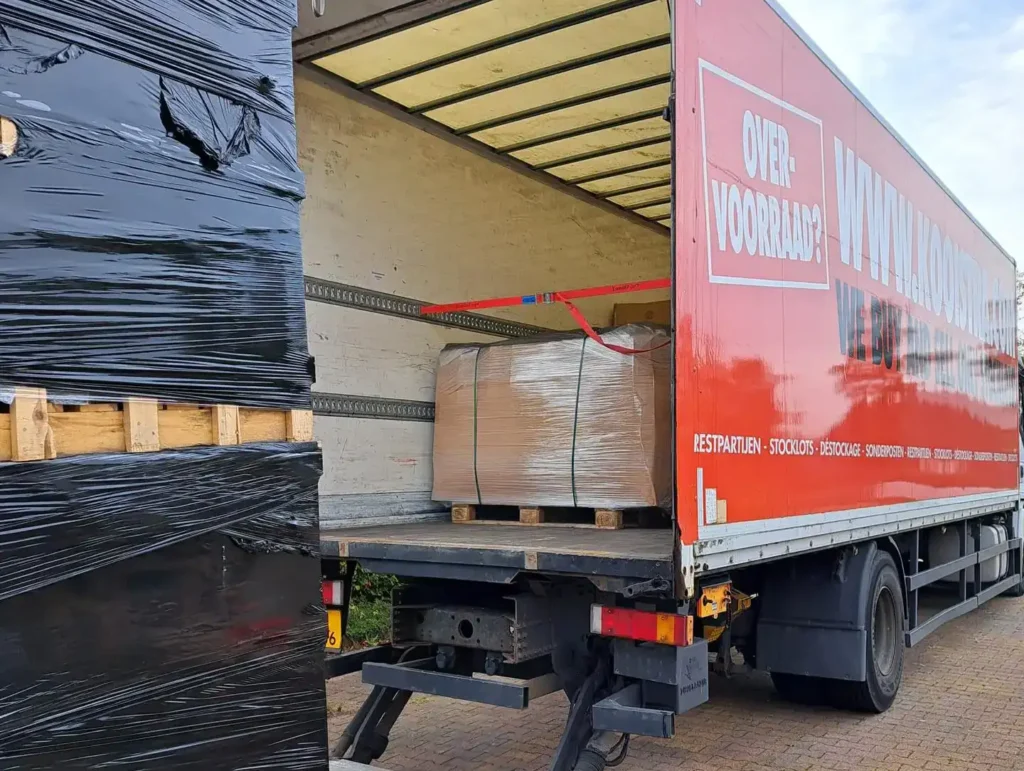
We buy the whole lot and make no selection here. Large, small and mixed lots. We buy everything in the field of consumer goods!
From returns, b-choice items, bankruptcy lots, other redundant stock, as well as shop stocks and inventories!
*We buy no private items, 2nd hand and household goods
Offer the goods easily, and we will come up with a fair offer within 24 hours
We buy everything at once, pay the invoice immediately and collect the lot ASAP.

UITSTEKENDTrustindex verifieert dat de oorspronkelijke bron van de recensie Google is. Al meerdere keren bij Kooistra besteld en elke keer perfect geregeld. Top service, snelle reacties en snelle verzending. Duidelijke en transparante communicatie. Absoluut een aanrader!Geplaatst opTrustindex verifieert dat de oorspronkelijke bron van de recensie Google is. Ik kom er al jaren Prima handel voor Zeer goede prijs En altijd goed geholpenGeplaatst opTrustindex verifieert dat de oorspronkelijke bron van de recensie Google is. snelle verzendingGeplaatst opTrustindex verifieert dat de oorspronkelijke bron van de recensie Google is. Ik ben zeer goed geholpen bij Kooistra, hier kunnen andere bedrijven nog een voorbeeld van zijn. Van begin tot en met de levering alles prima geregeld. Ik ben in ieder geval zeer tevreden over Kooistra.Geplaatst opTrustindex verifieert dat de oorspronkelijke bron van de recensie Google is. Info via de app vlot verkregen, bestelling via de site gedaan en keurig op tijd afgeleverd.Geplaatst opTrustindex verifieert dat de oorspronkelijke bron van de recensie Google is. Uitmuntende communicatie, super kwaliteit en alles volgens afspraak geleverd. Kunnen veel bedrijven een voorbeeld aan nemen.Geplaatst opTrustindex verifieert dat de oorspronkelijke bron van de recensie Google is. Erg tevreden. Betalen vlot de facturen en houden zich aan de afspraken.Geplaatst opTrustindex verifieert dat de oorspronkelijke bron van de recensie Google is. Çok büyük bir şirket ciddi operasyonlar yapıyorlarGeplaatst opTrustindex verifieert dat de oorspronkelijke bron van de recensie Google is. Altijd zeer fijn om te werken met Kooistra, zowel met het aan- als verkopen van goederen. Een betrouwbare partij die altijd zijn afspraken nakomt.

Min. order for shipping & pick up: €150
We are happy to help!