



Many retailers assume that clearance stock always means low quality, but that's not the case. The truth is that quality varies greatly depending on the type and source. This guide shows you how to strategically purchase clearance stock, minimise risks, and increase your margins through smart choices.
| Stop | Details |
|---|---|
| Quality differences | Surplus stock varies enormously in quality depending on type and origin; not everything is of low quality. |
| The controller works | Systematic quality control reduces the risk of unsaleable stock by 40%. |
| Multiple factors | Successful procurement requires balancing price, risk, quality, and delivery speed, not just the lowest price. |
| Documentation crucial | Bankruptcy stock offers opportunities but requires careful checking of paperwork and the condition of goods. |
| Decision framework helps | A structured approach significantly improves the efficiency and quality of your purchasing decisions. |
Clearance stock comprises all surplus inventory that companies wish to offload. This includes overstock that no longer fits the product range, returned goods from online shops, stock from bankruptcies, and surpluses after seasonal changes. clearance sale connects suppliers with business buyers such as wholesalers, retailers and online shops.
The market is growing by approximately 5% per year as companies pay more attention to costs. For buyers, this means access to products at competitive prices. For sellers, it's a way to quickly convert stock into cash and avoid storage costs.
Three main reasons for growth are:
Understanding how this market works is essential. The party that best capitalises on timing, quality control and negotiation will make the most profit.
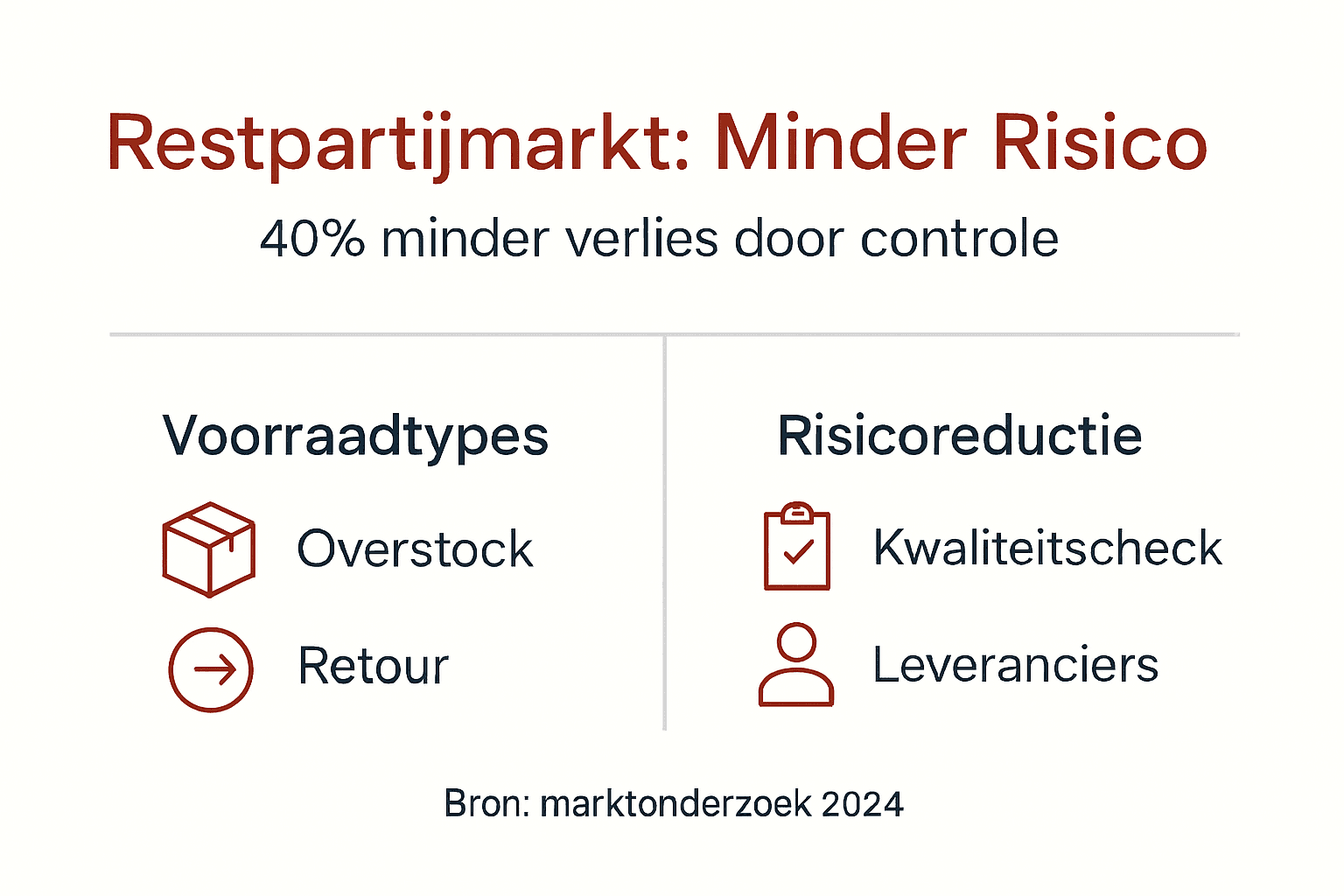
Each type of residual batch has unique properties and risks. Knowledge of these prevents costly errors.
| Type | Features | Risk |
|---|---|---|
| Overstock | Unused stock, often new products with tags | Low, highest quality |
| Return goods | Variable status, depends on return reason | Medium to high |
| Bankruptcy stock | Sharply priced, often incomplete documentation | High, requires inspection |
| Old stock | Outdated articles, seasonal | On average, marketability varies |
Overstock is the safest. These products are new and undamaged, simply surplus due to purchasing errors or mismatch in demand. You pay a little more but get reliable quality.
Return goods require more attention. Some are unopened and perfect, others have been used or damaged. The reason for return determines the condition. A customer who ordered the wrong size will return a better quality item than someone who reported a defect.
Bankruptcy stock offers the lowest prices but highest risks. Quality varies greatly Documentation is often missing. Always inspect on-site before paying. Calculate additional costs for sorting and any repairs.
Pro tip: Build relationships with trusted Remainder suppliers which are transparent about origin and condition. This saves time and prevents disappointment.
Old stock and seasonal surpluses can be profitable if you choose the right moment. You can buy winter items cheaply in the summer, but you need to arrange storage until the selling season.
Prices in the clearance market are dynamic and change rapidly. Several factors play a part.
Main price factors:
Price volatility can rise to 30 to 50% within a short period. A seller in acute cash flow need will accept lower prices. If multiple parties show interest, the price increases.
Negotiating only works if you've done your preparation. Know the market value, inspect the stock, and be clear about what you want. Sellers appreciate buyers who decide quickly and pay immediately. You use these advantages to negotiate better terms.
Timing is crucial. Buyers who are flexible and can wait find better deals. If you wait too long, the best opportunities will be gone. The balance between patience and decisive action determines your success.
Pro tip: Regularly visit trade fairs and showrooms where clearance stock is offered. Direct contact with sellers gives a better negotiating position than online surveys.
The best deals are created through combinations. If you purchase multiple parties, offer cash payment, or pick them up yourself, you will significantly improve your price position.
Risks are inherent to residual stock, but manageable with the right approach. Quality control is your best protection against losses.
Main risks:
Systematic checks make the difference. Research shows that quality control reduces the risk of unsaleable stock by 40%. This directly means higher margins and less write-offs.

An effective control process involves three steps. First, visual inspection of samples from different boxes or pallets. Check packaging, labels, and visible damage. The second step is a functional test for electronic or mechanical products. The third step is a documentation check of invoices, certificates, and warranty documents.
Statistics Companies that implement systematic quality control report 40% less loss on unsaleable stock.
Insufficient knowledge leads to hidden costs. You buy a batch cheaply but later discover that 30% is unsaleable. Logistics, storage and disposal costs eat into your margin. Prevent this by having realistic expectations and thorough research.
Pro tip: Take photographs and make notes during an inspection. This helps with later disputes and builds knowledge about suppliers and product types.
Build expertise by starting with smaller, less risky batches. Learn which product categories and suppliers are reliable before making large investments.
Myths about leftover stock lead to missed opportunities or poor purchases. Let's set the record straight on the main misconceptions.
Myth 1: All remnants are low quality
This is pertinent incorrect. Overstock often consists of perfect, new products. The reason for selling is overproduction or changed demand, not quality. Remaindered stock is not by definition low quality.
Myth 2: The lowest price is always the best deal
Price is only one factor. An extremely low price often points to problems with quality, documentation, or delivery terms. Total costs including transport, sorting, and risk determine the actual deal.
Myth 3: Liquidation stock is always profitable
Bankruptcy stock can be lucrative but carries higher risks. Documentation is often missing and the condition varies enormously. Without thorough inspection and experience, you risk losses.
Myth 4: Delivery speed is unimportant
On the contrary, speed directly affects price and quality. Rapid completion gives you a better negotiating position. Sellers incur storage costs per day and appreciate buyers who act quickly.
Myth 5: You don't need relationships
Good relationships with reliable suppliers are worth their weight in gold. They give you first choice on new batches, better terms, and will warn you of problems. This network is built through consistent, professional collaboration.
Understanding these realities prevents disappointment and significantly improves your purchasing results.
A structured approach improves your purchasing decisions and margins. This framework integrates all the factors we have discussed.
Four core questions for every purchase:
Research confirms that a framework of stock type, price, risk, and speed requirement leads to better procurement decisions.
| Criterium | Low Risk | Medium Risk | High Risk |
|---|---|---|---|
| Type | New stock | Returns screened | Bankruptcy refused |
| Price | 40-60% retail | 25-40% retail | 10-25% retail |
| Control | Sample | Systematic | 100% inspection |
| Documentation | Complete | Partly | Minimum |
Practical example: You are considering a batch of returned goods from a webshop. Step one, ask about reasons for return and the screening process. Step two, calculate total costs including transport and sorting. Step three, conduct a sample inspection. Step four, negotiate the price based on findings.
A second example concerns bankruptcy stock. Here, 100% inspections are necessary. The price is low but the risks high. Inspect every pallet, make photo documentation, and negotiate a no cure no pay clause for visible defects.
Pro tip: Create a scorecard per supplier based on previous experiences. Track quality, punctuality, and transparency. This will make future decisions faster and more reliable.
Improving supplier relationships secures better terms. Be reliable in payment, clear in communication, and professional in dealings. Suppliers prioritise loyal customers for interesting new opportunities.
Theory without action remains worthless. Here are concrete steps to get started immediately.
Select reliable suppliers
Select suppliers who are open about origin, condition, and any issues. Transparency prevents surprises and builds trust.
Organise systematice quality control:
A simple system works better than complex procedures that nobody follows. Keep it practical and consistent.
Use networks and exchanges:
Direct contact provides information that remains invisible online. You hear about new parties sooner and can secure better deals.
Pro tip: Monthly plan visits to wholesalers such as showrooms. Regular contact keeps you informed of market movements and new opportunities.
Optimise logistics and storage
Logistical efficiency determines your total profit margin. Buying cheap but storing expensively destroys profit.
The surplus stock market continues to grow as companies become increasingly cost-conscious. For astute buyers, this means ongoing opportunities to improve margins through the strategic purchase of excess inventory.
Success in this market requires an understanding of mechanisms, risks, and quality differences. The best deals aren't made by focusing solely on price, but by weighing all factors. Stock type, quality control, delivery speed, and supplier relationships all determine your outcome.
Systematic quality control significantly reduces risks. A structured decision-making framework helps you choose efficiently between different options. Reliable partners are crucial for sustainable profit.
The future of the residual stock market looks positive. E-commerce growth generates more returns, rapid fashion changes create surpluses, and retailers are constantly looking for cost savings. For professional buyers with knowledge and a network, opportunities are ripe for the picking.
“Successfully purchasing residual stock requires no luck, but rather a systematic approach, quality control, and strong supplier relationships. Those who master these three elements build sustainable margins.”
Start applying this framework today. Begin small, build experience and scale gradually as your expertise grows. The market rewards buyers who operate professionally and strategically.
Ready to strengthen your purchasing strategy? Kooistra.com Has been offering high-quality remaining stock since 1979 with transparent processes and sharp prices. With a 15,000 m² warehouse and direct access to overstock, returns, and liquidation stock, you'll find the inventory here that improves your margins.
Benefit from systematic quality control, fast delivery, and fair prices. Whether you mixed pallets looking for your webshop or complete stock for your wholesale, Kooistra.com offers the reliability and transparency you need. Visit the showroom, discover the extensive range and join hundreds of satisfied business customers.
Overstock consists of new, unused products that were not sold due to a mismatch in demand or overproduction. Returned goods are items that customers sent back, with quality varying from perfect to damaged depending on the reason for return.
Carry out systematic quality checks with sampling or full inspection. Start with small test orders from new suppliers. Always ask about origin and documentation, and calculate total costs including transport and sorting before making a decision.
Faster collection improves your negotiating position because sellers save on storage costs. Buyers who pay immediately and collect quickly often receive a 10 to 20% discount compared to standard terms. Urgency on the seller's part further increases this advantage.
Seek transparency in processes, clear conditions, and a willingness to allow inspection before purchase. Ask for customer references and check online reviews. Visit the warehouse in person to assess professionalism and organisation.
Bankruptcy stock often lacks complete paperwork such as warranty certificates or invoices. Check if basic documentation is present for customs and tax. Always inspect on-site and make photographic documentation of condition and quantities before paying.
No, some parties require extra inspection, sorting, or even minor repairs. Returns and bankruptcy stock often have 10 to 30% unsaleable items. Calculate these processing costs beforehand and adjust your purchase price accordingly for healthy margins.

After evaluating your offer, you will receive an immediate offer. We are flexible and proceed quickly. Bid - Pay - Collect.

We are the partner for reselling batches of goods outside your own sales market.

We are financially sound and we have the capacity to buy up sizeable consignments of goods.

We buy the whole lot and make no selection here. Large, small and mixed lots. We buy everything in the field of consumer goods!


