



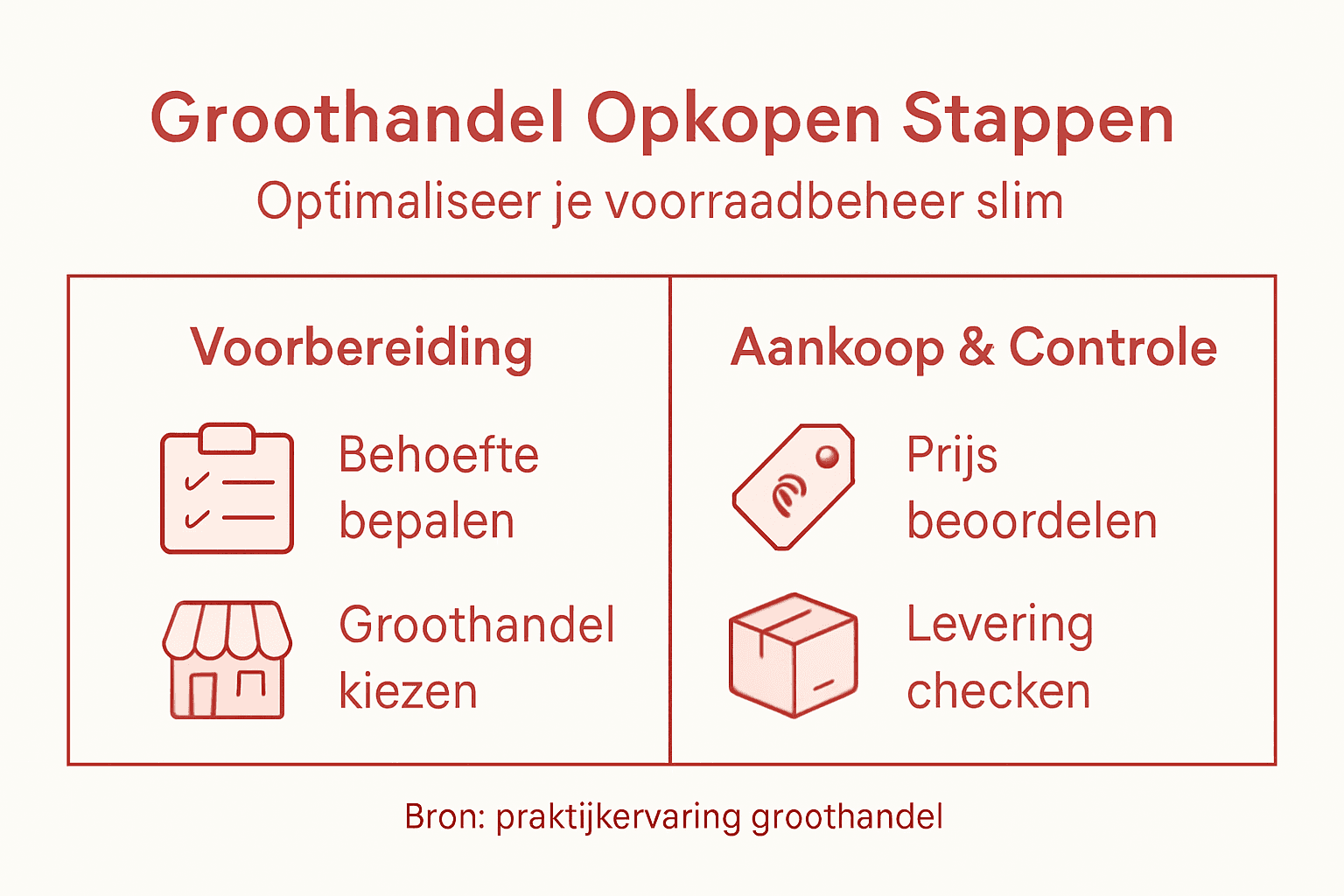
Finding good deals sounds attractive, but without insight into your stock requirements, you'll quickly make the wrong purchases and end up with products that don't sell. Retailers and online sellers in Europe know that shrewd purchasing makes the difference between profit and loss. By starting with a structured overview of your stock and stock turnover Avoid costly mistakes and align your purchases perfectly with your customers' demand.
| Key point | Explanation |
|---|---|
| 1. Inventory stock requirements | Record concrete sales figures to buy more effectively and avoid unwanted stock. |
| 2. Choose reliable suppliers | Research suppliers on quality, delivery times, and terms rather than just price. |
| 3. Evaluate quality and price | Request samples and calculate the total costs, including shipping costs and returns policy. |
| 4. Negotiate terms | Negotiations go beyond price; focus on delivery times and payment terms for better deals. |
| 5. Check delivery carefully | Perform an accurate check upon receipt of goods to prevent future problems. |
The foundation of smart purchasing begins with one essential step: knowing exactly what you need. This isn't just administration; it determines whether you make a profit or throw money away on stock that doesn't sell.
You probably already have a feel for your sales. But feeling isn't enough. You need to concrete figures Recording what you've sold in the past three to six months. Don't just look at total sales, but at products by category, by season, and by week.
This is what you write down:
The frequency of inventory depends on several factors. Fast-moving and high-value products require more frequent counts, whilst slower-moving goods need to be checked less frequently. For online sellers and retailers: the higher your stock turnover rate, the more often you need to count.
Now you come to the crucial goal: insight into your stock requirements. This goes beyond just knowing what you're selling. It's about understanding how much buffer you need, when to top up, and what risk you run with shortages.
Measurement is the basis of every purchasing decision. Without exact stock requirements, retailers are gambling with money.
Create a simple overview with these columns:
This will take you two to three hours the first time. After that, it becomes routine work. This insight allows you to gericht purchases to do with wholesalers with leftover stock, instead of blindly buying goods that don't fit what your customers want.
Profile tip: Share your stock requirements per season and trend. A winter coat requires different timing than summer clothing. Surplus stock from one season is dead money, so be realistic about how much you can actually sell for the next peak period.
Below you will find an overview of the strategic advantages of structured inventory management:
| Advantage | Impact on business | Why important |
|---|---|---|
| Lower stock costs | Less capital tied up in stock | Better cash flow management |
| Less dead stock | Less depreciation or price reduction | Higher profitability |
| Improved customer satisfaction | Always suitable products in stock | Returning customers |
| Faster turnover | Stock aligns with sales moments | Higher turnover rate |
| Prevents stockouts | Fewer lost sales | Sales process continuity |
Now that you know what you need, comes the next step: finding who will supply it. This is where many retailers make mistakes. They choose on price alone, and later pay for it with poor quality or undelivered goods.
A reliable supplier isn't the one with the lowest price. A reliable supplier is one with Consistent delivery times, Transparent communication guarantees on quality. These are your safeguards against stock shortages and against spending money on rubbish.
Start by researching your options. You are looking for wholesalers that specialise in the type of goods that you sell. Contact at least three different suppliers. Not one, but three. This will give you perspective on price, service, and reliability.
When assessing wholesalers, you should consider these points:
Assessing suppliers on reliability, range, and service helps stabilise your stock decisions. If a supplier offers flexible terms and communicates clearly, it saves you months of stress.

Next, you check it supply itself. Not every item from their catalogue will suit what you sell. You're looking for items that align with what your customers want, not what happens to be cheap. This requires discipline.
Create a checklist for each potential offer:
Reliability will get you further in the long run than one cheap job.
Never place large orders unchecked. Start small with a supplier to see if they deliver on their promises. Check if the goods supplied actually match what you discussed. This takes time now, but will save you tons of hassle later.
Pro tip: Ask your potential suppliers directly for references from other retailers they serve. A ten-minute conversation with someone who has worked with them for months will teach you more than all their marketing material.
You now have a number of potential parties in mind. The tempting offer comes in: goods at a price that seems almost too good to be true. This is the moment to be cautious. The cheapest price is never the best deal.
Assessing quality and price goes beyond comparing two numbers. You have to both factors simultaneously assess, because a low price with poor quality will cost you more than you save.
Here's what you do specifically. Always ask first samples before placing a large order. Not pictures, not descriptions. Real physical samples. Check them for wear and tear, damage, discolourations or defects.
Next, you calculate the actual cost price. This goes beyond just the purchase price:
By to manage cost price, quality and stock levels clearly, you make better comparisons between different offers. An Excel sheet helps with this incredibly. Put the same parties next to each other and compare all factors simultaneously.
Then you check the Terms of delivery. What happens if goods arrive damaged? How quickly can they be replaced? This greatly weakens or strengthens your assessment.
Create an evaluation checklist for each potential party:
Score each factor with green, yellow, or red. Not everything can be green. But you are looking for parties with more green than red.
A low price with poor quality will destroy your profit margin in two weeks.
One word of caution. Large quantities at extremely low prices can sometimes be leftover stock from bankruptcies or returns. This can be fine if you know and expect it. But make sure you know what you're buying.
Pro tip: Keep a logbook of suppliers and their delivery times, quality, and complaint history. After three to four orders with the same supplier, you'll know if they are reliable or not. This saves you months of trial and error.
The price you are offered is rarely the final word. This is where many retailers and online sellers make a mistake: they accept the first quote as set in stone. But negotiation is a standard part of the wholesale game.
You are not going to negotiate to get rid of the supplier. You are going to negotiate to arrange better terms that work for both parties. This is about much more than just the price per item.
What will you be negotiating? Negotiations with suppliers are about price, delivery times, payment terms and return policy. These are your four crucial points to focus on.
Before you negotiate, prepare yourself. Know what the market price is for comparable goods. Know how much you can really spend without jeopardising your margin. Know what delivery times you need and what payment terms are realistic.
These are your negotiation topics:
Start the conversation clearly. State what you need and by when. Then ask about their capabilities. This leaves room for creative solutions. A supplier may not be able to meet all your preferences, but they might offer flexibility in other areas.
Consider this: a supplier also benefits from slow movement and predictability. If you state that you will take the same amount each month and promise this, you will likely get better prices than someone who buys randomly.
Good agreements with suppliers reduce your risk and make your stock more stable.
A written record is essential. What you agree to verbally is not enough. Ask for a written quotation with all agreements clearly recorded: quantities, prices, delivery times, return conditions and payment terms. This prevents future misunderstandings.
Professional advice: Begin negotiations with suppliers where you intend to purchase at least three to four times per year. One-off orders give you little room for negotiation. However, loyalty to a supplier gives you more power.
The goods have arrived. This is not the time to relax. This is the time to precisely check what you have received before you put it into your system. A good check now will prevent months of problems later.
Start with a Physical inventory of what arrives. Check quantities against what you ordered. Don't just count pallets, but also loose boxes if necessary. Mismatches between what you ordered and what arrives happen more often than you might think.
Then you check the quality. This is where many retailers get sloppy because they're in a hurry. Take your time. Open packages at random throughout the shipment. Check for damage, staining, wear and tear, or defects. If you have five percent faulty goods in your sample, you likely have five percent faulty in your entire shipment.
This check happens in this order:
If your findings differ from what you ordered, record this. Photos help. This is your proof if you need to contact the supplier about returns or refunds.
Integration of new stock directly into the management and till system prevents errors and keeps your stock information accurate. Once your check is complete, you enter everything into your system. This can be done manually via data entry or via scanners if you have them.
Ensure your system is up-to-date with what you physically have. This is the point where many retailers create discrepancies that emerge later on. If your figures in your system don't match what you actually have, this problem won't resolve itself.
Checking on arrival is cheaper than detecting problems three weeks later.
Integration also means making new stock available for sale in your shop or online store. Put it in the right place on your shelf or in your online catalogue.
Here follows a comparison of control and integration methods for received stock:
| Method | Accuracy | Time commitment | Recommended use |
|---|---|---|---|
| Manual counting | High at small parties | Slowly | Small shops, low volume |
| Scanning with barcodes | Very high | Fast | Online shops, larger stocks |
| Random check | Average | Quick/short | Large batches with reliable suppliers |
Pro tip: Create a receiving log for each supplier. Note the date, quantity, quality findings, and whether everything matches. This will help you recognise patterns. If supplier X always sends five percent faulty items, then you can anticipate this or switch suppliers.
The article emphasizes the importance of precisely mapping out your inventory needs and choosing reliable suppliers with consistent quality and competitive prices. Do you recognise these challenges in your own inventory strategy? At Kooistra.com We understand that smart purchasing of residual batches and surplus stock is essential to improve your cash flow and reduce inventory costs.
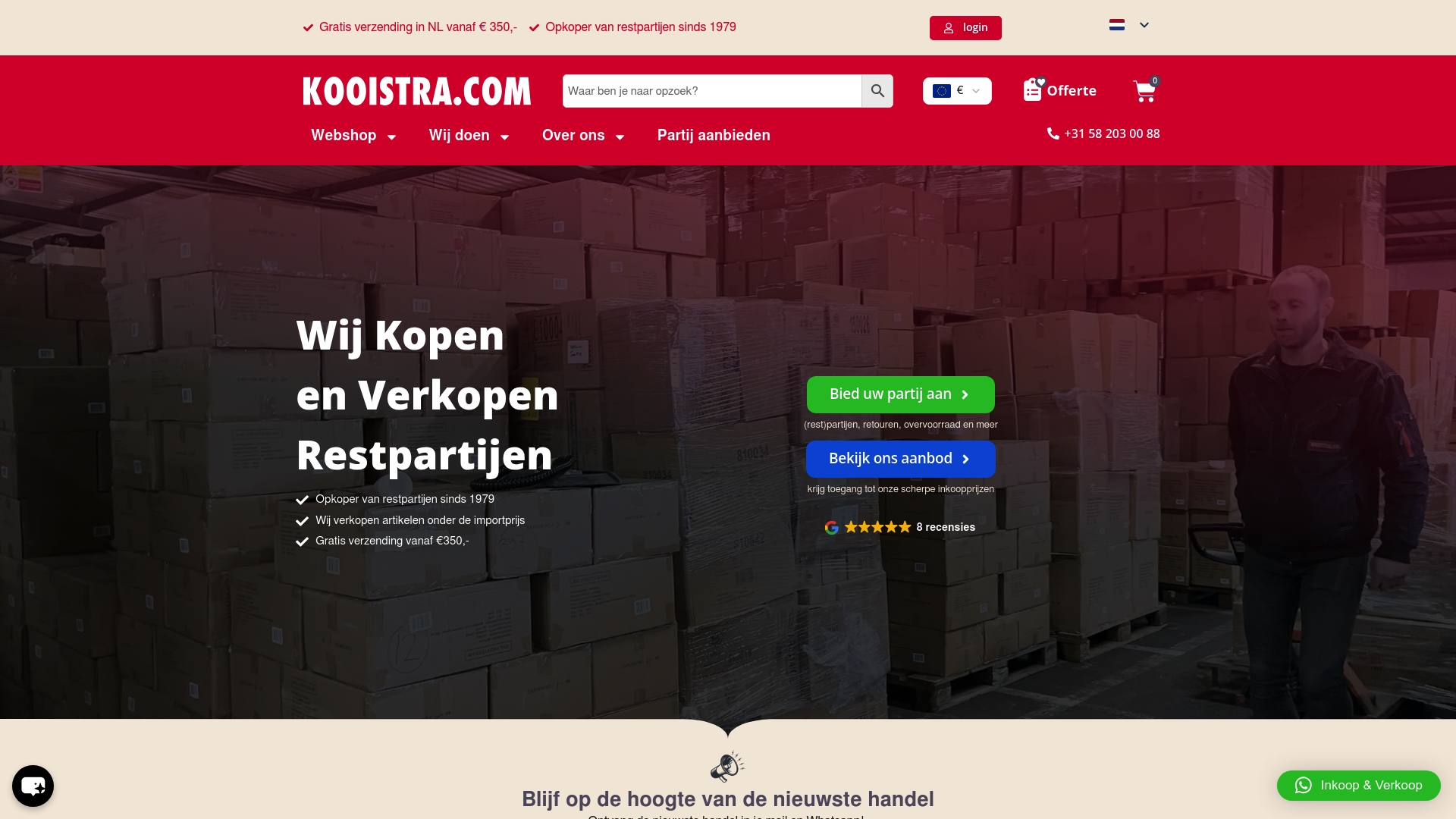
With a 15,000 m2 warehouse and over 40 years of expertise, we offer Kooistra.com an extensive range of overstock, liquidation stock and returned goods that perfectly match your stock needs. Benefit from our fast processing, direct payment and sharp prices so you don't run the risk of dead stock or stockouts.
Do you want to buy quality directly at advantageous rates and take your stock management to the next level? Visit Kooistra.com's website and discover our possibilities. Start making targeted and profitable purchases today and prevent your procurement decisions from remaining guesswork.
Read more about the importance of reliable suppliers and inventory management in practice at Kooistra.com and experience the difference yourself.
To estimate your inventory needs, record the sales figures from the past three to six months. Create an overview with key data such as the fastest-selling products and minimum stock levels to avoid stockouts.
Search for reliable wholesalers with consistent delivery times, transparent communication, and quality guarantees. Contact at least three suppliers to get a good overview of their offerings and service.
Always ask for samples before placing a large order, so you can check the quality. Don't just compare prices, but also the total cost including shipping fees and any customs duties.
Negotiate the unit price, delivery times, payment terms, and returns policy. Ensure that you record these agreements in a written quotation to avoid misunderstandings.
Carry out a physical inventory of the received goods and check them for quality and quantities. Document any discrepancies to enable contact with the supplier later on if necessary.
After checking the delivery, enter the new stock into your system. Use a receiving log to track quality findings and quantities, so you can easily anticipate any issues later.

After evaluating your offer, you will receive an immediate offer. We are flexible and proceed quickly. Bid - Pay - Collect.

We are the partner for reselling batches of goods outside your own sales market.

We are financially sound and we have the capacity to buy up sizeable consignments of goods.

We buy the whole lot and make no selection here. Large, small and mixed lots. We buy everything in the field of consumer goods!


