


✓ Free shipping in NL from €500,-
✓ Buying stocklots since 1979
A stock buyer helps you get rid of excess stock quickly. Need warehouse space or want to free up cash quickly? A stock buyer will buy your stock in one go - often within days, without any hassle. At Kooistra.com, we even arrange this within 24 hours.

In short: A business acquisition plan consists of seven crucial phases: from drawing up an acquisition plan to the final contract signing. At Kooistra.com, we apply this step-by-step plan when purchasing lot goods, furniture, stamps, and textile stock from companies in liquidation. Thorough preparation, valuation, and due diligence are essential for a successful business acquisition or stock intake.
When a company goes bankrupt or ceases its operations, the opportunity arises to acquire valuable stock or assets. At Kooistra.com, we have had experience since 1979 in acquiring remaining stock and company inventories. Whether it's buying furniture in Limburg, buying stamps, or buying second-hand clothing: a structured step-by-step plan for company acquisition prevents costly mistakes. In this article, we share our proven step-by-step plan that applies to both complete company acquisitions and the professional purchasing of liquidation stock.
A business acquisition step-by-step plan is a methodical approach in seven to nine structured phases, whereby a buyer systematically acquires an existing company or business stock. The step-by-step plan includes orientation, valuation, negotiation, due diligence, and contracting.
For wholesalers, such as Kooistra, we apply this principle daily when taking over overstock and liquidation batches. It prevents you from overpaying, overlooking hidden risks, or encountering legal complications. According to Chamber of Commerce mislukt 30% van alle bedrijfsovernames door gebrekkige voorbereiding — een risico dat met een goed stappenplan sterk verkleint.
An acquisition plan concretely describes what you want to acquire: sector, minimum size, geographic location, price range, and your own expertise. This profile acts as a compass during your search and prevents impulsive decisions.
At Kooistra, for example, we specifically focus on non-food clearance goods in the Netherlands and Belgium: home accessories, garden items, fashion, and personal care products. We do not purchase food or hazardous substances. Such a clear profile saves time: suppliers and curators immediately know if their stock is a good fit for us. For whom To purchase remaining stock via Kooistra, the same principle applies: know in advance what you are looking for and what margins you need.
The three most commonly used valuation methods are: the asset valuation method (balance sheet value), the earnings valuation method (multiple of profit), and the discounted cash flow method (future cash flows). For inventories, the purchase value minus 30-70% often applies, depending on condition and sales speed.
When buying furniture in Limburg or stamps, we at Kooistra use a pragmatic valuation: we analyse the original purchase value, current market demand, and expected turnaround time. A batch of designer furniture, for example, has a higher residual value than seasonal garden chairs. According to CBS The average residual value of company stock in bankruptcies ranges between 15-35% of the book value.
Photographs and inventory lists provide an initial impression, but only a physical inspection reveals damage, wear and tear, and actual quantities. At Kooistra, we check every lot on-site before making a final offer – this is indispensable, particularly with large furniture or textile lots.
Due diligence is the thorough examination of legal, financial, and factual aspects before an acquisition. You check ownership rights, ongoing contracts, fiscal obligations, and any liens or seizures on stock.
When buying second-hand clothing or stamps, we check if the seller is the rightful owner – not whether the stock serves as collateral for a bank loan. We also verify that VAT has been correctly accounted for. For more complex business acquisitions, you would engage accountants and legal professionals. We regularly work with trustees who sell bankrupt stock, which simplifies the legal aspect but requires vigilance regarding hidden claims.
Following successful due diligence, a purchase agreement is drawn up with clear terms regarding price, payment conditions, delivery period, warranties, and liabilities. A letter of intent often precedes this.
Kooistra works with standard stock intake contracts, adapted to each situation. Essential clauses: who bears the transport costs, what is the payment term, and what happens in case of discrepancies in quantities or quality? Purchasing company supplies via Kooistra we usually complete the entire settlement within 48 hours — speed is crucial in liquidations.
Common arrangements include: full payment upon delivery, partial payment with the remainder after inspection, or earn-out arrangements where part of the purchase price is dependent on future performance. For inventory, we typically work with direct payment after deducting an inspection discount.
A solid step-by-step plan for company takeovers protects you from costly mistakes and significantly increases your chances of success. Whether you are taking over an entire business or specifically buying up furniture, stamps, or textiles: systematic preparation, realistic valuation, and careful due diligence are essential. Kooistra.com has been applying these principles since 1979 when purchasing batch goods throughout the Netherlands. Do you have business stock for sale or do you want to learn how to buy professionally? Contact for no-obligation advice on your specific situation.
**META:** Step-by-step plan for company acquisition in 7 phases: from acquisition plan to contract. Practical advice for taking over stock, buying furniture & bulk goods.
A business acquisition consists of seven crucial phases: drawing up an acquisition plan, identifying a target, making initial contact, performing a valuation, conducting due diligence, negotiating, and signing the contract. At Kooistra.com, we apply this step-by-step plan when acquiring part-owned goods, furniture, and textile stock from companies in liquidation. Thorough preparation and valuation are essential for success.
Due diligence is a thorough investigation into the financial, legal, and operational situation of a company before taking it over. This involves checking inventory, contracts, debts, and assets. At Kooistra.com, we always carry out due diligence when purchasing bulk goods and residual stock to minimise risks and determine a fair price.
Stock valuation is based on market value, condition of goods, salability, and current demand. At Kooistra.com, we professionally assess bulk goods, furniture, stamps, and textiles. We consider quality, quantity, and residual value. A realistic valuation prevents financial disappointment and ensures a fair takeover for both parties.
In the event of bankruptcy, stock and assets are sold to pay creditors. The administrator often organises auctions or seeks specialised buyers like Kooistra.com. We purchase bulk goods, furniture and textile stock from bankrupt companies. This offers the administrator a quick resolution and gives valuable goods a second life in wholesale.
A full company takeover usually takes between three and six months, depending on complexity and negotiations. At Kooistra.com, inventory takeovers are often quicker, sometimes completed within a few weeks. We are efficient in purchasing bulk goods and clearance lots from companies in liquidation. Speed is important to prevent value depreciation and to offer both parties swift certainty.
Offer your goods over the phone, directly to our buyer. In many cases, you will receive an offer immediately!
Easily append your offer via WhatsApp and receive an offer quickly!
Send your offer by e-mail to inkoop@kooistra.com Do you want to send large files? Then use Wetransfer.com
Do you have (remaining) lots, returns or collections that are no longer selling well? Want to clear out your warehouse or have goods with old packaging? We will gladly buy them up! As an experienced B2B buyer, we work quickly and easily. Send your offer via our form, and we will respond within one working day. Upon agreement, we pay in advance and arrange transport ourselves. It's that simple to do business with us!

After evaluating your offer, you will receive an immediate offer. We are flexible and proceed quickly. Bid - Pay - Collect.

We are the partner for reselling batches of goods outside your own sales market.

We are financially sound and we have the capacity to buy up sizeable consignments of goods.

We buy the whole lot and make no selection here. Large, small and mixed lots. We buy everything in the field of consumer goods!
From returns, b-choice items, bankruptcy lots, other redundant stock, as well as shop stocks and inventories!
*We buy no private items, 2nd hand and household goods
Offer the goods easily, and we will come up with a fair offer within 24 hours
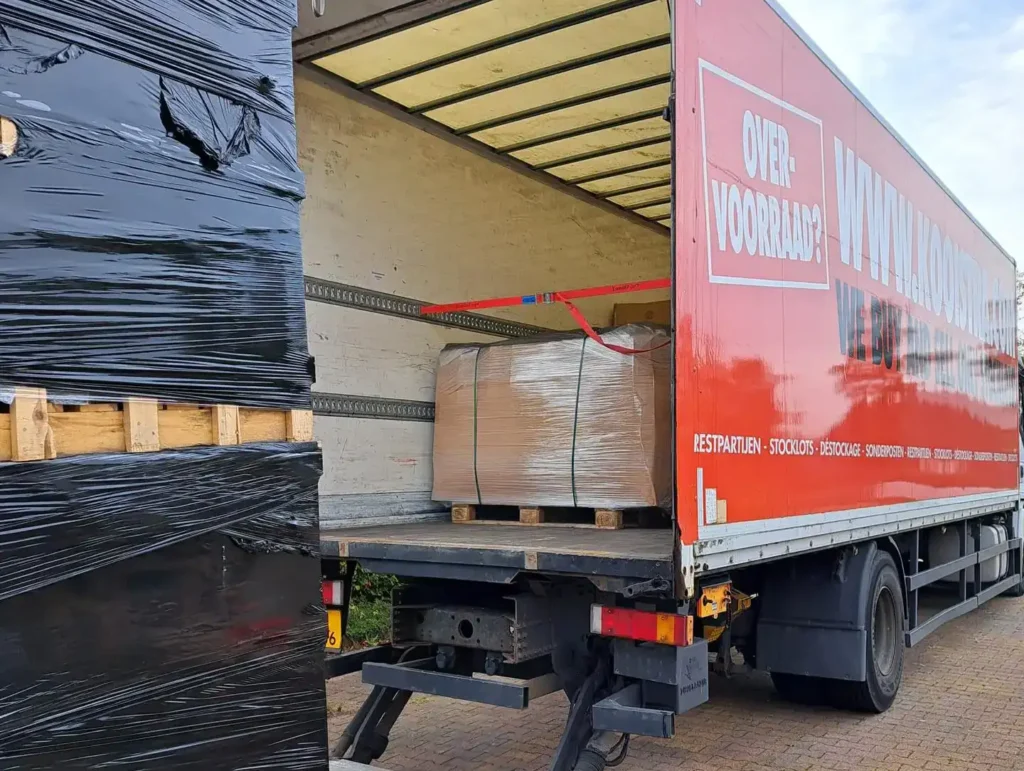
We buy everything at once, pay the invoice immediately and collect the lot ASAP.

UITSTEKENDTrustindex verifieert dat de oorspronkelijke bron van de recensie Google is. Al meerdere keren bij Kooistra besteld en elke keer perfect geregeld. Top service, snelle reacties en snelle verzending. Duidelijke en transparante communicatie. Absoluut een aanrader!Geplaatst opTrustindex verifieert dat de oorspronkelijke bron van de recensie Google is. Ik kom er al jaren Prima handel voor Zeer goede prijs En altijd goed geholpenGeplaatst opTrustindex verifieert dat de oorspronkelijke bron van de recensie Google is. snelle verzendingGeplaatst opTrustindex verifieert dat de oorspronkelijke bron van de recensie Google is. Ik ben zeer goed geholpen bij Kooistra, hier kunnen andere bedrijven nog een voorbeeld van zijn. Van begin tot en met de levering alles prima geregeld. Ik ben in ieder geval zeer tevreden over Kooistra.Geplaatst opTrustindex verifieert dat de oorspronkelijke bron van de recensie Google is. Info via de app vlot verkregen, bestelling via de site gedaan en keurig op tijd afgeleverd.Geplaatst opTrustindex verifieert dat de oorspronkelijke bron van de recensie Google is. Uitmuntende communicatie, super kwaliteit en alles volgens afspraak geleverd. Kunnen veel bedrijven een voorbeeld aan nemen.Geplaatst opTrustindex verifieert dat de oorspronkelijke bron van de recensie Google is. Erg tevreden. Betalen vlot de facturen en houden zich aan de afspraken.Geplaatst opTrustindex verifieert dat de oorspronkelijke bron van de recensie Google is. Çok büyük bir şirket ciddi operasyonlar yapıyorlarGeplaatst opTrustindex verifieert dat de oorspronkelijke bron van de recensie Google is. Altijd zeer fijn om te werken met Kooistra, zowel met het aan- als verkopen van goederen. Een betrouwbare partij die altijd zijn afspraken nakomt.

Min. order for shipping & pick up: €150
We are happy to help!