


✓ Free shipping in NL from €500,-
✓ Buying stocklots since 1979
A stock buyer helps you get rid of excess stock quickly. Need warehouse space or want to free up cash quickly? A stock buyer will buy your stock in one go - often within days, without any hassle. At Kooistra.com, we even arrange this within 24 hours.

In short: Wholesale surplus goods offer retailers access to branded products at significantly reduced prices. This overstock arises from overproduction, seasonal changes, or returns. Kooistra.com has been a specialist in trading surplus, liquidation stock, and clearance lots since 1979. By purchasing smartly, companies can improve their margins while simultaneously contributing to the circular economy.
In a retail landscape where margins are under pressure, more and more entrepreneurs are looking for alternative purchasing channels. Wholesale surplus goods form a growing market where excess stock, returned items, and seasonal products are given a second chance. For retailers who know how to navigate this market, substantial advantages await: lower purchasing prices, unique product mixes, and the ability to respond quickly to trends without the risk of full collections.
Surplus goods are excess products from manufacturers, distributors, or retailers that have not been sold through regular sales channels. This stock is usually brand new and in original packaging, but needs to be sold quickly due to storage or cash flow reasons.
Surplus arises from various causes: overproduction to meet expected demand, seasonal changes causing collections to become outdated, packaging modifications, cancellations of large orders, or business closures. CBS investigation schat dat Nederlandse bedrijven jaarlijks voor miljarden euro's aan voorraden aanhouden, waarvan een aanzienlijk deel uiteindelijk als overschot wordt verkocht.
The difference with regular wholesale lies in the price-quality ratio. Where standard wholesale operates with fixed margins and predictable deliveries, surplus goods often offer discounts of 40-80% on the original wholesale price. The downside is that volumes and product mix are variable – what is available today may be out of stock tomorrow.
Retailers opt for surplus purchasing because it delivers direct cost savings without compromising on product quality. This enhances gross profit margins and creates competitive advantages by enabling sharp consumer prices.
Besides the financial benefit, sustainability plays an increasingly important role. By purchasing existing stock instead of stimulating new production, companies contribute to a circular economy. Consumers increasingly appreciate this: research by Central Government shows that 67% of Dutch consumers consider sustainability important in purchasing decisions.
For specific retail formulas, surplus offers other advantages. Discount stores and online marketplaces can keep their range dynamic with changing offers. Start-ups can still offer quality branded products with limited capital. And because you can To see what party goods are currently available, keep your stock fresh and relevant.
Purchasing through a surplus wholesaler typically involves batch sales: complete batches of products at a fixed price per item or per pallet. Buyers receive a detailed packing list, inspect the goods if desired, and take the entire batch upon agreement.
With specialist traders like Kooistra, this process is transparent. You will get insight into available lots with descriptions, quantities, condition of goods, and price. Some lots can be viewed on location in Leeuwarden, so you can assess the quality before deciding. After agreement, delivery or collection will follow as arranged.
Successful purchasing requires knowledge. Important points to consider are: seasonal relevance (purchasing summer items in November requires storage capacity), brand reputation (well-known brands sell faster), condition of packaging, and the wholesaler's returns policy. When you regularly maintains contact with your surplus supplier, you often get priority on interesting deals in your product category.
Virtually all retail categories generate surplus, but the most common are fashion and textiles, home furnishings, garden items, toys, electronics, personal care, and seasonal products. Availability fluctuates with retail cycles and economic developments.
Fashion and textiles traditionally form the largest surplus category. Rapid trend changes and seasonal collections create a constant stream of overstock. Home furnishings follow at a distance, with mainly decorative items, small furniture and kitchenware. Garden items peak in autumn when garden centres offload their remaining stock.
Electronics and gadgets appear as surplus due to product replacements or new models making older versions commercially less appealing. This category requires extra attention regarding warranties and technical obsolescence. Personal care – from cosmetics to hygiene products – becomes available during packaging changes or reformulations, with the old stock remaining perfectly usable.
The main risks involved in surplus purchasing are unpredictable availability, variable product quality within batches, limited return options, and potential damage to brand reputation when selling outdated items. These risks require professional procurement and reliable trading partners.
Minimise risks by always working with recognised wholesalers who are transparent about origin and condition. Check if the trader is a member of trade associations and read reviews from other retailers. Physically inspect larger batches before purchasing, or request representative samples for international transactions.
Furthermore, build expertise in your product category. Understand regular market prices so you can calculate realistic profit margins. Diversify your purchasing across multiple suppliers rather than investing your entire budget in one large deal. And realise that surplus purchasing is a supplement to regular purchasing, not a complete replacement – combine both for optimal stock security.
Wholesale surplus goods offer attractive opportunities for retailers looking to optimise their margins while contributing to more sustainable trade. The key to success lies in collaborating with reliable partners, building product knowledge, and strategically utilising surplus alongside regular purchases. Kooistra.com has supported retailers since 1979 with transparent lot sales, personal advice, and a wide range of products from fashion to garden items. Discover our current offerings and experience how surplus can elevate your business.
—
**META:** Wholesale surplus goods: discover how retailers save with overstock. Benefits, risks, and purchasing via Kooistra.com since 1979.
Surplus goods are branded products with overstock due to overproduction, seasonal changes, or returns. These items are new and fully saleable, but are offered at heavily reduced prices. Kooistra.com has been trading these surplus batches since 1979, giving retailers access to quality products with attractive margins for their shop.
Purchasing surplus items directly leads to higher profit margins due to lower purchasing prices for branded goods. Retailers can broaden their product range without a large budget, quickly turn over stock, and respond to demand. Furthermore, it contributes to sustainability by reducing waste. Kooistra.com offers reliable quality and diverse product categories for every retailer.
Surplus goods are ideal for webshops, physical retailers, market traders, discount stores, and outlet stores. Start-up entrepreneurs also benefit from low entry costs and well-known brands. Kooistra.com supplies to both small and large buyers in the Netherlands, with batches of various sizes and product categories that cater to diverse business models and target groups.
Reliable wholesalers such as Kooistra.com inspect surplus stock in advance for quality and completeness. Always ask for product specifications, brand names, packaging condition, and any defects. Serious suppliers offer transparency regarding origin and condition. Check samples upon delivery and build a relationship with your wholesaler for consistent quality and reliable cooperation.
Pay attention to product category, seasonality, brand name, and marketability within your target audience. Check minimum order quantities, delivery times, and return conditions. Calculate your selling price and margin in advance. Kooistra.com advises retailers on suitable batches and market opportunities. Build experience with smaller batches before making large investments in surplus goods for optimal returns.
Offer your goods over the phone, directly to our buyer. In many cases, you will receive an offer immediately!
Easily append your offer via WhatsApp and receive an offer quickly!
Send your offer by e-mail to inkoop@kooistra.com Do you want to send large files? Then use Wetransfer.com
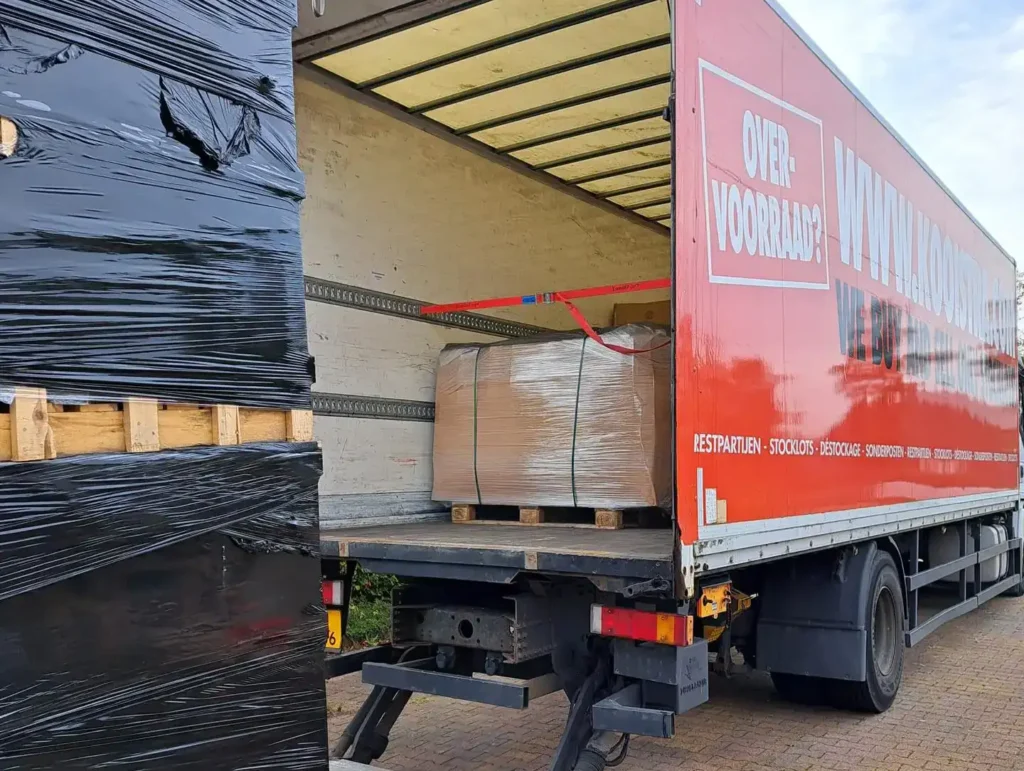
Do you have (remaining) lots, returns or collections that are no longer selling well? Want to clear out your warehouse or have goods with old packaging? We will gladly buy them up! As an experienced B2B buyer, we work quickly and easily. Send your offer via our form, and we will respond within one working day. Upon agreement, we pay in advance and arrange transport ourselves. It's that simple to do business with us!

After evaluating your offer, you will receive an immediate offer. We are flexible and proceed quickly. Bid - Pay - Collect.

We are the partner for reselling batches of goods outside your own sales market.

We are financially sound and we have the capacity to buy up sizeable consignments of goods.

We buy the whole lot and make no selection here. Large, small and mixed lots. We buy everything in the field of consumer goods!
From returns, b-choice items, bankruptcy lots, other redundant stock, as well as shop stocks and inventories!
*We buy no private items, 2nd hand and household goods
Offer the goods easily, and we will come up with a fair offer within 24 hours
We buy everything at once, pay the invoice immediately and collect the lot ASAP.

UITSTEKENDTrustindex verifieert dat de oorspronkelijke bron van de recensie Google is. Al meerdere keren bij Kooistra besteld en elke keer perfect geregeld. Top service, snelle reacties en snelle verzending. Duidelijke en transparante communicatie. Absoluut een aanrader!Geplaatst opTrustindex verifieert dat de oorspronkelijke bron van de recensie Google is. Ik kom er al jaren Prima handel voor Zeer goede prijs En altijd goed geholpenGeplaatst opTrustindex verifieert dat de oorspronkelijke bron van de recensie Google is. snelle verzendingGeplaatst opTrustindex verifieert dat de oorspronkelijke bron van de recensie Google is. Ik ben zeer goed geholpen bij Kooistra, hier kunnen andere bedrijven nog een voorbeeld van zijn. Van begin tot en met de levering alles prima geregeld. Ik ben in ieder geval zeer tevreden over Kooistra.Geplaatst opTrustindex verifieert dat de oorspronkelijke bron van de recensie Google is. Info via de app vlot verkregen, bestelling via de site gedaan en keurig op tijd afgeleverd.Geplaatst opTrustindex verifieert dat de oorspronkelijke bron van de recensie Google is. Uitmuntende communicatie, super kwaliteit en alles volgens afspraak geleverd. Kunnen veel bedrijven een voorbeeld aan nemen.Geplaatst opTrustindex verifieert dat de oorspronkelijke bron van de recensie Google is. Erg tevreden. Betalen vlot de facturen en houden zich aan de afspraken.Geplaatst opTrustindex verifieert dat de oorspronkelijke bron van de recensie Google is. Çok büyük bir şirket ciddi operasyonlar yapıyorlarGeplaatst opTrustindex verifieert dat de oorspronkelijke bron van de recensie Google is. Altijd zeer fijn om te werken met Kooistra, zowel met het aan- als verkopen van goederen. Een betrouwbare partij die altijd zijn afspraken nakomt.

Min. order for shipping & pick up: €150
We are happy to help!