


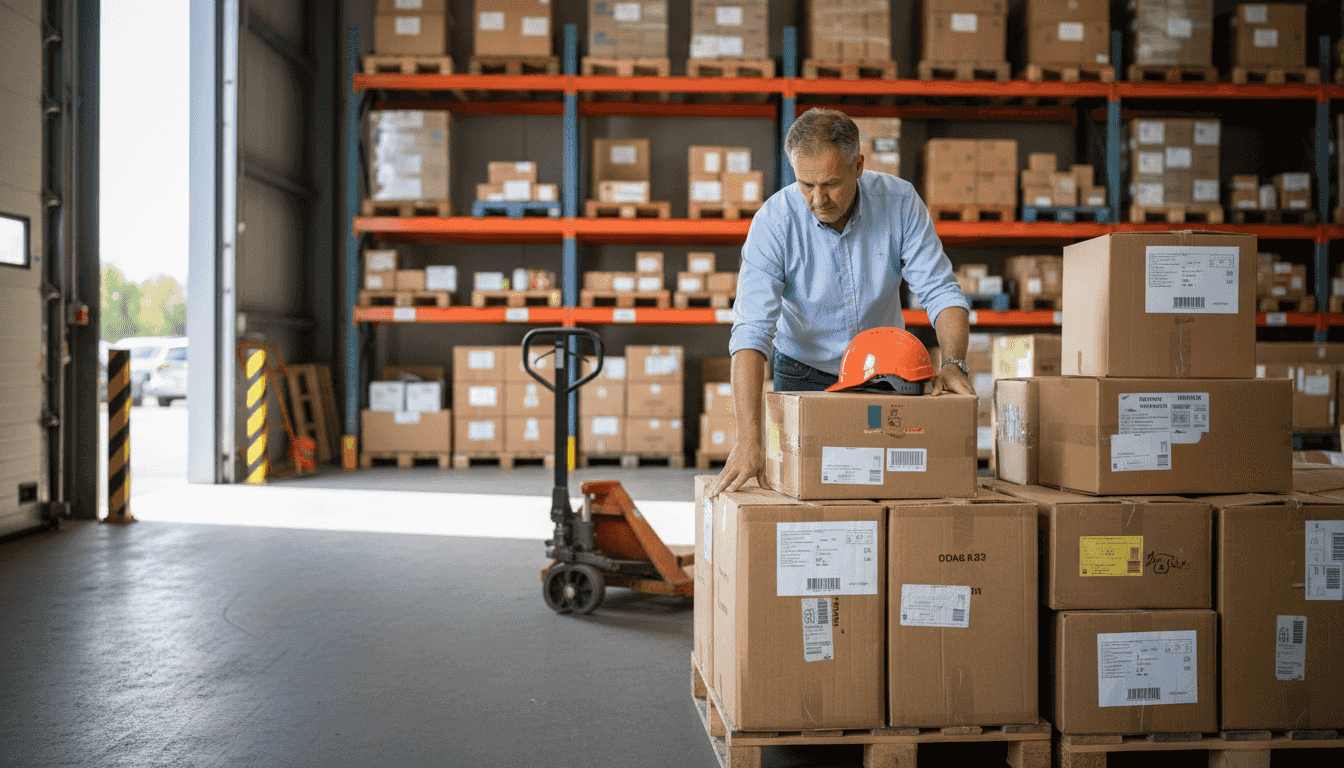
Every entrepreneur knows it: pallets full of unsold goods take up valuable space while money is tied up. For retailers and wholesalers in Europe, smart purchasing isn't just about price, but about speed and margin. A buyer plays an important role in the trade chain by making products available that would otherwise be difficult to trade. In this article, you'll discover why buying stock is more than just selling off leftovers and how this approach makes your business more flexible and profitable straight away.
| Punt | Details |
|---|---|
| Role of the Purchaser | A buyer purchases surplus stock and resells it, which is crucial for the supply chain. |
| Advantages for Retailers | Buying stock offers lower purchasing costs and higher profit margins, thereby increasing competitiveness. |
| Managing Risks | Caution is required to minimise risks such as storage costs and quality issues. |
| Strategic Relationships | Building relationships with suppliers is essential for better negotiations and access to unique supplies. |
Stock opkopen, also known as buying surplus stock, is the purchase of large quantities of goods that retailers, wholesalers, or manufacturers can no longer sell themselves. buyer is a trader who purchases these products and resells them through their own sales channels.
This sounds simple, but it goes much deeper. A buyer plays an important role in supply chains by making products available that would otherwise be difficult to trade. While a retailer or manufacturer might not know how to get rid of excess stock quickly, a buyer knows exactly which channels exist for that.
Share buybacks happen in many different situations:
Buying up stock is essentially saving goods that would otherwise be lost.
The answer is simple: profit. A reseller buys goods at a discount because the seller wants to get rid of them quickly. The reseller then sells these goods on for a profit via webshops., Retail chains or export channels. This works because:
At Kooistra.com For example, this has been happening since 1979. We purchase large batches and ensure these goods find their way to retailers, webshops, and exporters who can sell them.
Normal trade works like this: you make something, you sell it, done. With stock buying, it's the reverse: you are the saviour who has to ensure goods still generate money. This requires different skills.
A buyer must be able to quickly assess the value of goods, where they can be sold, and what the real market price is. This is much faster and riskier than ordinary trading.
Professional advice Always understand what you are buying and why: determine in advance what profit margins you minimally need before taking over a large batch.
Not all stock is the same. When you consider what you are going to buy, you encounter many different categories of goods. Each type has different characteristics, risks, and profit margins.
Stock consists of purchased goods which can be sold on or used in the production process. For resellers, it is crucial to know what type of stock you have, as this determines how quickly you can resell it and how much profit you will make from it.
Overstock is the most common type that buyers encounter. These are goods that retailers or manufacturers have over-purchased. They simply made or ordered more than they could sell.
Overstock has a big advantage: it's usually in perfect condition and original packaging. This makes it relatively easy to resell. Supermarkets, clothing stores, and electronics shops constantly have overstock that they want to get rid of.
Return goods are products that customers return to the shop. Sometimes these are unused items in their original packaging, and sometimes they are goods with minor defects.
This type requires more attention. You need to check if everything is still complete and if the packaging is damaged. However, returns offer good profit margins as many retailers do not want to trade them themselves.
Sometimes shops have goods lying around that simply aren't selling anymore. These could be previous season's collections, or products for which demand has disappeared. Low stock requires creativity to implement.

There are opportunities here for bulk buyers who know how to bring these goods to other markets. Exporting to other countries, online sales, or outlet channels are possibilities.
When a company goes bankrupt, all the stock has to go. This happens quickly and in large volumes. STOCKLOTS randomly mixed goods can be contained, so you need to be extra careful.
The advantages: extremely low prices and large quantities. The risk: you don't always know exactly what you're getting until it arrives.
Christmas decorations, winter clothing, sun cream. Seasonal goods are very valuable at the right time, worthless out of season.
As a buyer, you need to have a good understanding of when to purchase these goods and when to resell them. Too late, and the market will have passed.
Below is an overview of the main types of stock that buyers can purchase, along with their unique characteristics:
| Stock type | Features | Potential risks | Suitable sales channels |
|---|---|---|---|
| Overstock | Original packaging, common items | Slow sales, seasonal influence | Retail, webshops, wholesale |
| Return goods | Sometimes incomplete, slight damage | Control required, lower margin | Outlet, secondary markets |
| Uncommon | Old collections, niche products | Difficult to sell, creativity | Export, online marketplaces |
| Bankruptcy stock | Mixed brands, low purchase | Uncertainty about quality | Diverse sales channels, bulk sales |
| Seasonal | Temporary high demand, cyclical | Storage until the correct season | Pop-up shops, seasonal sales |
Professional advice Always create a checklist per stock type: what is your specialisation, what margin do you need, and how quickly do these goods need to go? This helps you quickly purchase the right stock.
Buying up stock offers far more benefits than you might initially think. For retailers and wholesalers, this can make a huge difference to your profit margins and business performance.
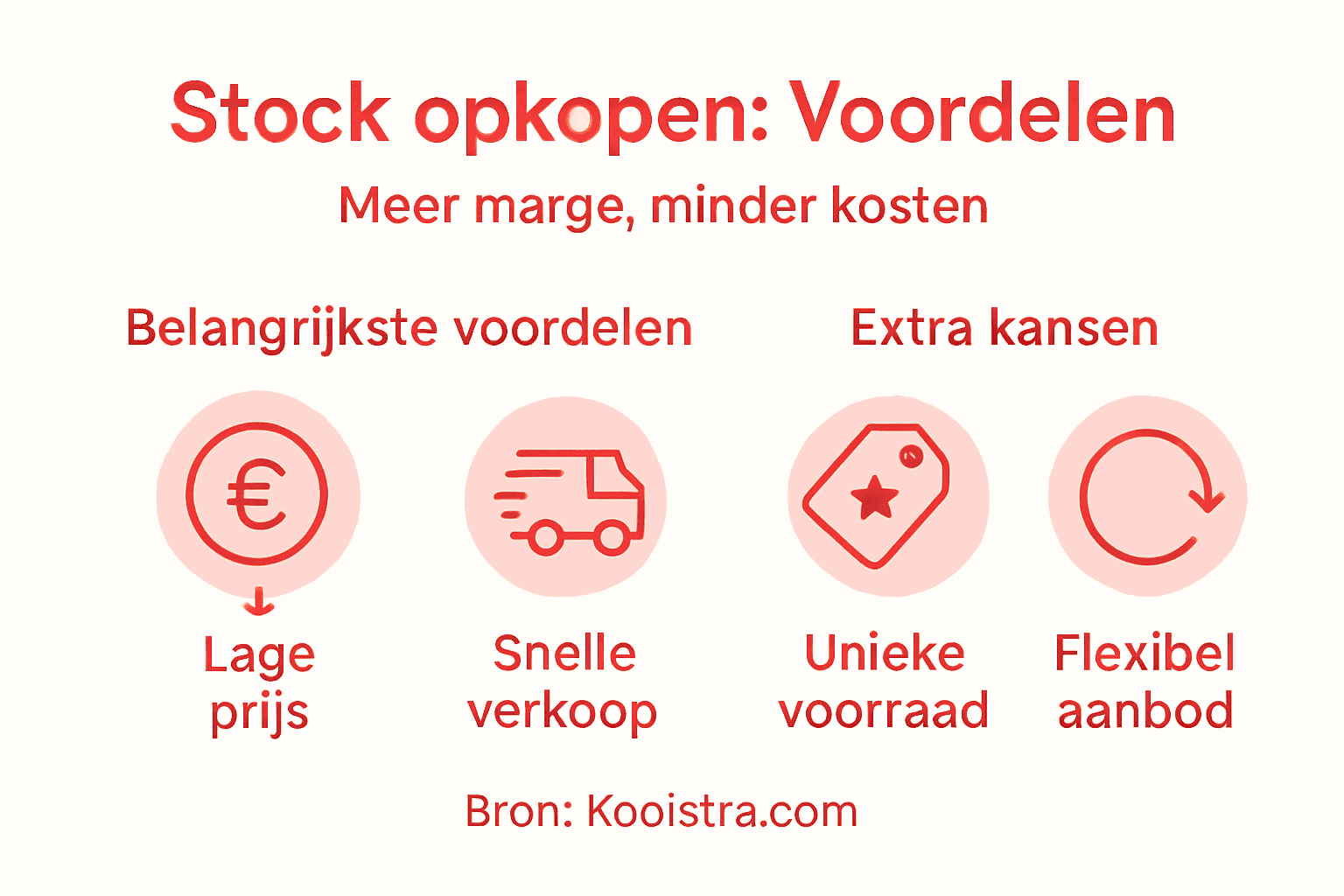
The main advantages lie in the ability to purchase at much lower prices than usual. This directly gives you more room to build in your own profit margin.
This is the core advantage. Stock buy-ups cost significantly less than normal procurement channels. You'll pay a fraction of the normal wholesale price.
The difference is enormous:
This difference goes directly to your profit margin. A retailer who normally makes a 30% margin can easily achieve a 50-60% margin with bought-in stock.
This isn't just extra profit, this is your competitive edge.
With normal suppliers, you wait weeks for delivery. With bulk buying, it's much faster. More and more entrepreneurs are seeking out buyers because they want to get rid of the stock quickly.
This means for you:
When you buy up stock, you sometimes get goods that you normally can't get at all. Old collections, end-of-line models, seasonal items that you've missed.
This gives you opportunities to broaden your product range without making large investments. Customers see that you offer unique items.
By buying at low purchase prices and selling quickly, you give your working capital much less to do. Your money isn't tied up in stock; it's circulating.
A wholesaler that normally holds an average of 60 days' worth of stock can reduce this to 20-30 days by purchasing 'stockpiled' goods.
The table below shows how stock buybacks affect entrepreneurs' profit margins and flexibility compared to regular purchasing.
| Aspect | Buy shares | Regular purchasing | Impact on the business |
|---|---|---|---|
| Purchase price | Strongly reduced | Recommended price minus a small discount | Higher profit margin |
| Margins | 50-60% possible | 20-30% common | Increase competitive strength |
| Delivery speed | Within a few days | Often weeks delivery time | Quick resale |
| Selection of assorted items | Unique, antique collections | Standard, current products | Broad and flexible offering |
You are not bound by normal delivery schedules and manufacturer MOQs (minimum order quantities). Buying stock gives you the freedom to get in and out quickly if something isn't working.
Professional advice Start small: first buy a test batch of a type of goods and accurately measure how much you profit from it before starting with large volumes.
Buying stocks offers fantastic opportunities, but it doesn't come without risks. If you're not careful, those risks can completely eat away your profits. Fortunately, there are concrete ways to mitigate those risks.
The biggest risks aren't where you'd expect them. It's not just about bad goods, but also about timing, storage, and speed.
The majority of risks when buying stock come from unforeseen costs:
The biggest cost factor is not the purchase price, but how long your goods remain with you.
The main risk is that you have to store your goods for too long. Storage costs can quickly eat up the entire margin. A batch that you purchase for 1,000 euros can cost you 500 euros in storage if it remains unsold for three months.
That's why speed is crucial. You need to know before you purchase whether you can quickly resell these goods.
Checking before you buy saves you trouble. You should check the goods for:
Advanced quality controls and cycle counting This helps you avoid being saddled with bad deals. Do your thorough checks on location before paying.
The best way to mitigate risks is to prevent them:
Don't forget to factor these costs in before you offer a price:
A good buyer factors these costs in before making an offer.
Professional advice Always make a calculation: purchase price + transport costs + storage costs against expected selling price. If that doesn't yield at least a 30% margin, be wary of that consignment.
A good buyer isn't someone who buys goods at random and hopes for the best. It requires strategy, planning, and prior knowledge. With the right approach, you can drastically increase your profit margin.
The key lies in knowing what you're buying, where you're selling it, and how quickly. These aren't guesses, they're calculations.
The best deals aren't made at trade shows, but through relationships. Suppliers who know and trust you will call you when they have overstock. They'll give you first refusal before going to anyone else.
Build relationships with:
A good relationship means you'll hear from parties sooner and can negotiate better on price.
Not every party is suitable for you. You must carefully choose which parties you purchase from. This depends on:
A consignment that you cannot resell costs you more than it yields.
The best buyers work with data. They know precisely:
Keep track of what's working and what's not. This will help you make the right decisions quicker next time. Professional buyers use this data systematically.
Your purchase price determines your margin. So negotiation is critical. Smart tricks:
The first offer is never your best offer. Don't be pressured.
The faster you resell goods, the lower your storage costs. That's why good buyers always have multiple sales channels:
This way you aren't tied to one channel.
Professional advice Always negotiate payment terms: can you pay in instalments if goods sell slowly? This gives you more flexibility and risk management.
The challenge of excess stock is clear in the article: you want to purchase stock quickly and profitably without the risk of long-term storage or unsaleable products. Buying overstock, returns, and bankrupt stock offers opportunities, but requires expertise and reliable partners to help you navigate this process smoothly. At Kooistra.com we understand these pain points and have been offering the perfect solution for retailers, wholesalers, and webshops looking to improve their margins by purchasing overstock at competitive prices since 1979.
Do you also want to benefit from direct payment, fast delivery, and an extensive range of overstock and returned goods? We invite you to discover our possibilities at Kooistra.com. Take the step today, visit our site and experience how our experience and stock will make your business more profitable. Together we will strengthen your margin through smart purchasing and effective resale.
Buying up stock offers lower purchasing costs, which can significantly increase profit margins. This enhances competitiveness and provides the opportunity to offer unique and scarce goods.
The most suitable types of stock to purchase are overstock, returned goods, obsolete items, liquidation stock, and seasonal goods. Each type has its own risks and benefits.
Risks can be limited by carrying out quality checks in advance, purchasing small test batches, negotiating terms well, and regularly monitoring your stock.
Storage costs have a significant impact on profitability, as goods that sit around for a long time can eat into the margin. Quick resale helps to minimise these costs.

After evaluating your offer, you will receive an immediate offer. We are flexible and proceed quickly. Bid - Pay - Collect.

We are the partner for reselling batches of goods outside your own sales market.

We are financially sound and we have the capacity to buy up sizeable consignments of goods.

We buy the whole lot and make no selection here. Large, small and mixed lots. We buy everything in the field of consumer goods!


