


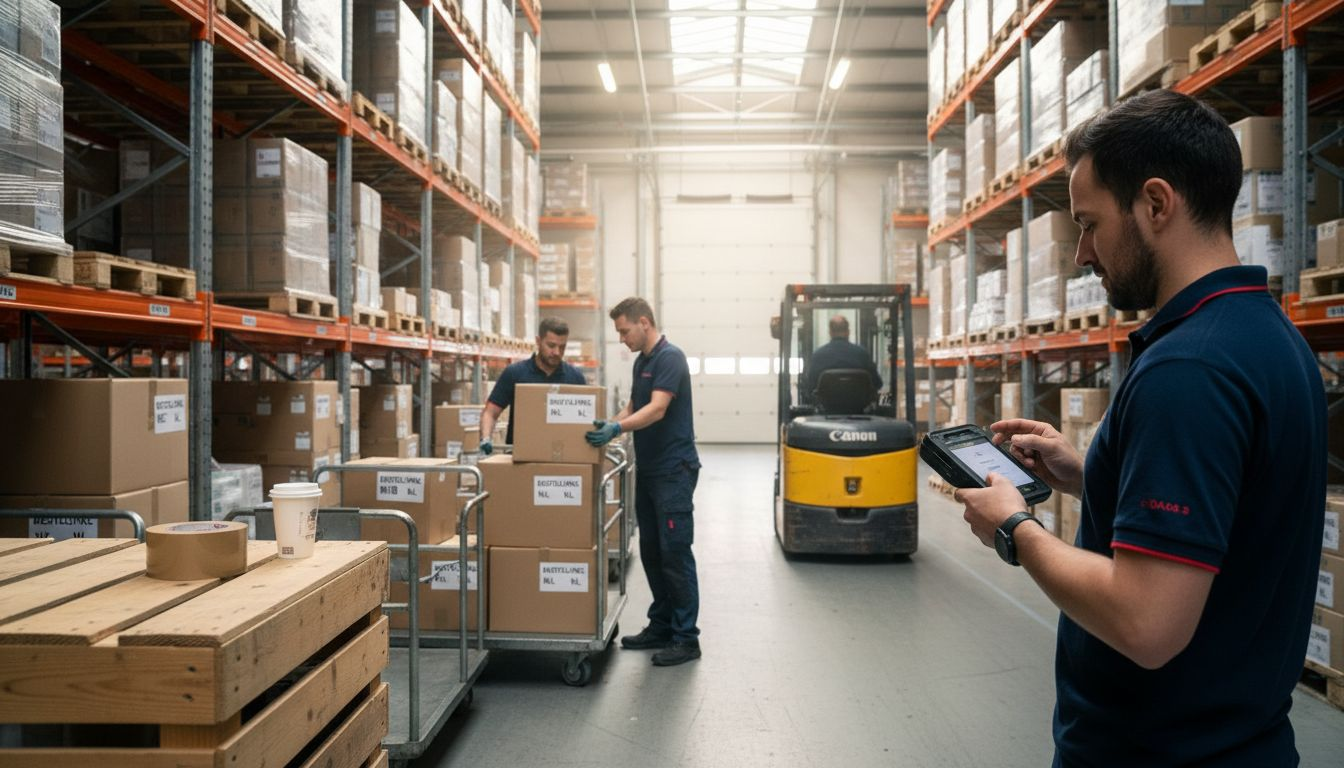
Many retailers think that residual stock is mainly old or damaged goods. But did you know that meer dan 60% van restpartijen uit actieve, jonge voorraad van minder dan 12 maanden oud bestaatThis guide shows you how to save up to 50% through the wholesale market and strengthen your product range with quality items.
| Punt | Details |
|---|---|
| Groothandelsmarkt | Trading platform for surplus stock, returns and seasonal overstocks at sharp prices |
| Financial benefits | Tot 50%% kostenbesparing op inkoopkosten door directe toegang tot restpartijen |
| Quality control | Professional inspection reduces unsaleable stock by 40% |
| Logistical speed | Delivery within 48 hours increases revenue by an average of 15% |
| Successful procurement | Strategic selection criteria and workflow optimisation increase profit margin by 30% |
The wholesale market for remaining batches offers retailers and online shops access to surplus stock at competitive prices. These are products that no longer fit into regular sales channels but are often still of excellent quality.
Remainder stock comes from various sources:
The European residual product market is growing annually by approximately 8%. This growth is due to retailers increasingly struggling with overstock caused by rapid trends and shorter product cycles. For retailers, this means more supply and better opportunities to purchase stock advantageously.
The biggest misconception is that residual stock is always old inventory. More than 60% of residual stock consists of active, young inventory less than 12 months old. So you are often buying current products that perfectly match current demand.
This dynamic makes the wholesale market interesting for entrepreneurs who want to expand their product range without the high costs of regular purchasing. You can find everything from electronics to clothing, from household goods to toys.
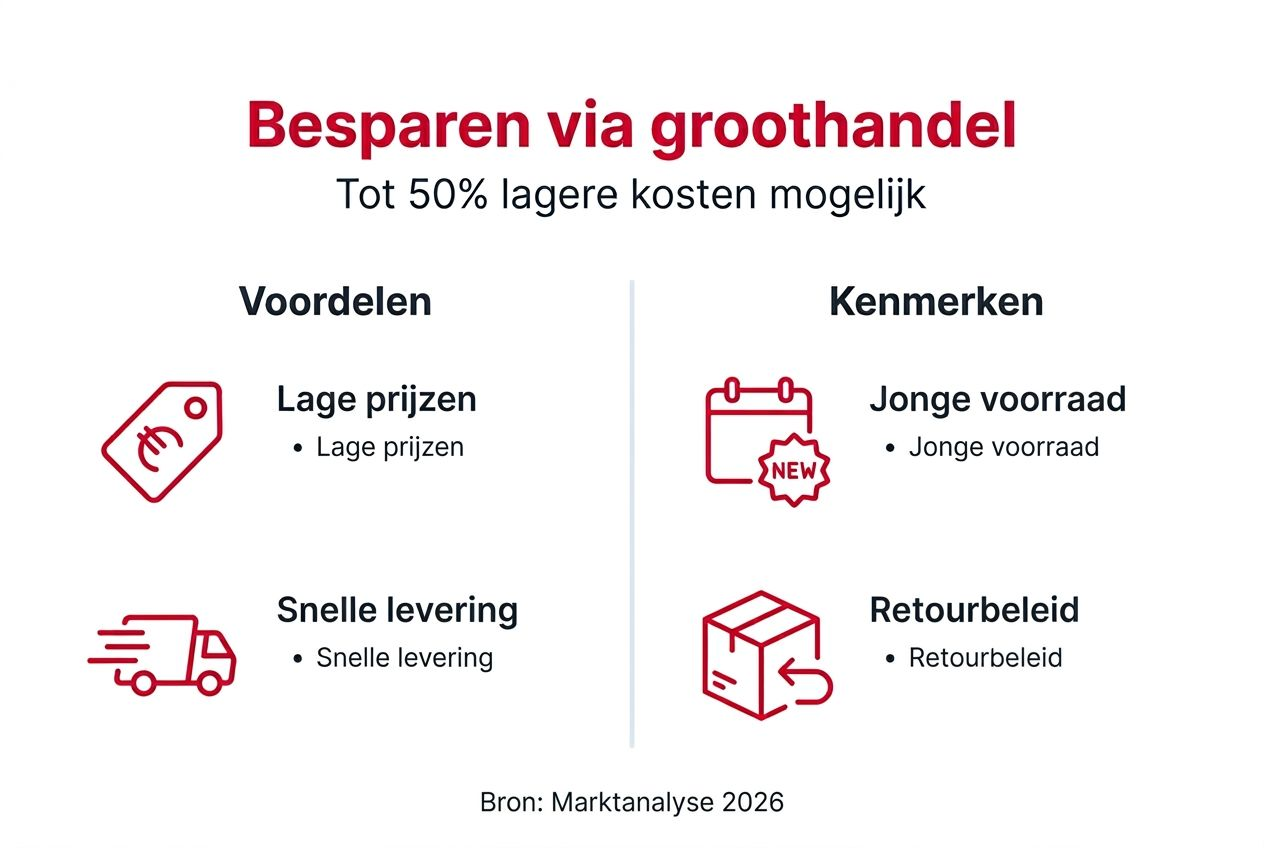
The main reason for purchasing leftover stock is cost savings. Up to 50%% cost savings are possible via the wholesale market's remaining stock.. This saving is directly reflected in your profit margin or selling price.
Suppose you normally buy for €10 per item and sell for €20. Your margin is €10. For clearance lots, you pay €5 per item. You sell for the same €20 but your margin increases to €15. That's 50% more profit per item sold.
But there are also risks:
Quality control is crucial to mitigate these risks. Without control, you run the risk of 20 to 30% of your purchases being unsellable. That completely destroys your cost savings.
“Good pre-checks save a lot of trouble afterwards. I always inspect a sample before I accept a batch.”
In the case of quality issues, you must act swiftly. Contact the supplier within 48 hours. Document problems with photographs. Discuss solutions such as partial returns or price compensation. Only work with parties who limit risks through transparent terms and conditions.
The difference between success and failure lies in how much due diligence you do. Ask for samples, check references, and start with small test batches. Only scale up after good experiences.
Professional wholesalers employ stringent inspection procedures. They sort stock by quality and flag damaged items. Quality control reduces unsellable stock by 40%. This makes the difference between profit and loss.
A good inspection follows these steps:
Return conditions are essential. Ask about the returns policy before you buy. Good suppliers offer a 7 to 14-day return period for quality issues. Without a return option, you bear all the risk yourself.
Pro-tip: Visit the warehouse in person if you are purchasing large quantities. This way, you can see the stock and inspection methods with your own eyes. This prevents disappointments and builds trust.
You can also assess quality yourself:
Reliable wholesalers transparently share information about quality. They provide detailed lists with quantities, grades, and any defects. Be wary of parties who remain vague about quality and risks.
Choose suppliers with:
Fast delivery makes all the difference to stock rotation. Delivery within 48 hours increases revenue by an average of 15%. You can respond quickly to demand without long waiting times.
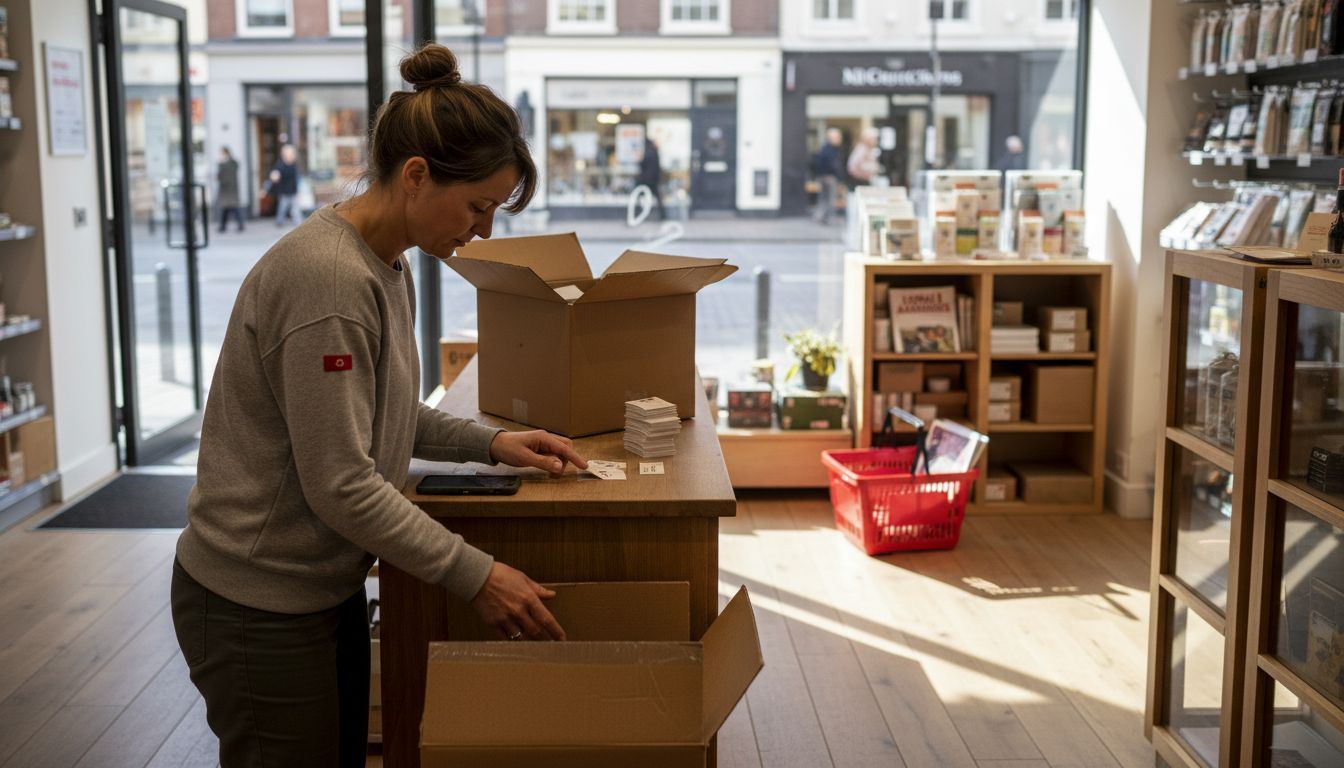
Wholesalers with their own warehouses of 10,000 m² or more usually offer better service. They have stock immediately available and can handle large orders quickly. Smaller parties without their own storage often work more slowly.
| Logistics aspect | Business impact |
|---|---|
| Delivery within 48 hours | 15% higher revenue from faster sales |
| Large storage capacity | More choice and immediate availability |
| Flexible processing | Less capital tied up in stock |
| Professional shipping | Less damage and returns |
Inventory management becomes more efficient with a fast turnaround time. You only order what you need and replenish quickly. This prevents you from tying up a lot of capital in stock that sits for months.
Cashflow benefits enormously from short turnaround times. Imagine you buy €5,000 worth of stock and sell it within 2 weeks. With slow delivery, this takes 6 weeks. In the first case, your capital turns over 3 times faster. That means 3 times more turnover for the same amount of money.
Pro-tip: Calculate your stock rotation by dividing annual revenue by average stock value. A ratio of 6 or higher is good for most online shops. Higher rotation means healthier cash flow.
Practical example: a webshop buys in €2,000 worth of stock weekly and sells with a 100% margin. With delivery within 2 days, it sells within 10 days. That’s €4,000 revenue per cycle. With 5 cycles per month, it generates €20,000 revenue. With slow delivery of 2 weeks, there are only 2 cycles, so €8,000 revenue. The difference is €12,000 per month.
Good logistics for residual stock not only saves time but also money. Less inventory means lower storage costs, less risk of obsolescence, and better cash flow.
Successful purchasing starts with clear criteria. The price-quality ratio determines your profit margin. Cheap stock of poor quality costs more than it yields. Look for batches with at least B-grade quality for a maximum of 60% of the retail price.
| Strategy | Advantages | Disadvantages |
|---|---|---|
| Strategic procurement | Long-term relationships, better prices, consistent quality | Higher initial investment, commitment |
| Tactical procurement | Flexibility, low commitment, seizing opportunities | Variable quality, no volume discounts |
Strategic procurement means regularly purchasing from the same suppliers. You build relationships and gain access to better deals. Procurement strategies for residual stock to require planning but deliver consistent results.
Tactical purchasing focuses on sporadic opportunities. You seize offers and unique batches. This works well for webshops that can act fast and want a varied assortment.
Delivery terms affect your profitability:
Pro-tip: Negotiate payment terms for large orders. Many wholesalers offer discounts for upfront payment or accept staggered payments if you have a good relationship.
Stock availability is crucial for webshops. Choose suppliers with ample stock in the categories you sell. Check selection criteria for remaining stock such as assortment, quantities, and refresh frequency.
Optimal purchasing decisions:
Many entrepreneurs have incorrect ideas about leftover stock. These myths lead to missed opportunities or poor decisions.
Myth 1: Remaining stock is always damaged or old. Reality: Young stock dominates the market. Overproduction and seasonal changes provide current products in perfect condition.
Myth 2: Quality is always poor. Reality: many leftover batches are A or B grade quality. With good checks, you can find excellent products at low prices.
Myth 3: Risks are unmanageable. Reality: professional wholesalers offer return conditions and transparency. Risks are manageable with due diligence.
Myth 4: Only large retailers can buy residual stock. Reality: Smaller online shops and retailers can find batches from €500. Access is widely available.
These misunderstandings prevent entrepreneurs from benefiting from savings. Understand the reality and make informed decisions. The market offers real opportunities for those who are well-informed.
Efficient workflows maximise profit from residual batches. Workflow optimisation increases revenue by 30% to reduce waste and increase speed.
Follow this process from procurement to sale:
Cost savings start with smart purchasing but also with efficient processing. Automate where possible with inventory systems that connect purchasing, storage, and sales. This saves hours of manual work.
Inventory turnover speeds up with:
Good administration prevents losses. Record purchase prices, selling prices, and margins per batch. This way, you can see which categories and suppliers are most profitable. Repeat successful strategies and stop loss-making categories.
Would you like to take advantage of the savings and opportunities that leftover stock offers? We have been helping retailers and webshops access quality surplus stock since 1979.
Our clearance market offers less risk thanks to professional quality control and transparent terms. You'll find various categories from household items to electronics, all at competitive prices.
With 15,000 m² of warehouse space, we deliver quickly and reliably. Your stock will be ready for sale within 48 hours. This increases your turnover and immediately improves cash flow.
Visit our showroom or view the current range of remaining stock online. Discover how you can save up to 50% through wholesale and strengthen your product range. Start today and increase your profit margin.
A wholesale market for surplus stock is a platform where excess inventory is traded. This includes products from overproduction, returns, seasonal changes, or bankruptcies. Retailers and online shops buy here at competitive prices to save costs.
Savings range from 30% to 50% on regular purchase prices. This depends on product category, quality, and quantity. Electronics and seasonal items often offer higher discounts than basics.
No, more than 60% is young stock in good condition. Many end-of-line lots are created by surpluses, not by quality problems. With good selection and inspection, you buy excellent products.
The main risks are unsaleable stock due to poor quality and no possibility of return. You can prevent this by checking samples, working with reliable suppliers, and starting small. Good due diligence significantly reduces risks.
Look for at least 5 years of experience, transparent terms, and positive reviews. Visit the warehouse if possible and ask about the returns policy. Start with small orders to test the collaboration before scaling up.
Yes, many wholesalers accept orders from €500 to €1,000. You don't need to be a large retailer. Start with test batches in categories you already sell and build experience that way.

After evaluating your offer, you will receive an immediate offer. We are flexible and proceed quickly. Bid - Pay - Collect.

We are the partner for reselling batches of goods outside your own sales market.

We are financially sound and we have the capacity to buy up sizeable consignments of goods.

We buy the whole lot and make no selection here. Large, small and mixed lots. We buy everything in the field of consumer goods!


