



Excess stock can be a massive cost for retailers and wholesalers, but with the right clearance sales process, it becomes a profitable opportunity. In 2026, it is crucial to adopt a structured approach that minimises legal risks and guarantees maximum returns. This comprehensive guide will lead you through every stage of the sales process, from preparation to aftercare. You will learn how to manage product liability, determine the correct pricing, and identify the most effective channels. With practical steps and concrete tips, you can transform excess stock into a reliable source of income.
| Punt | Details |
|---|---|
| Legal compliance is essential | Compliance with EU regulations prevents liability claims and fines |
| Preparation determines success | Thorough inventory and quality control accelerate the sales process |
| Action plan increases efficiency | From stock check to order fulfilment, structure ensures better results |
| Verification optimises profit | Continue monitoring and process improvement to maximise yield and minimise risk |
Successful sales of remaining stock begin with thorough preparation. Without this foundation, you risk delays, legal issues, and missed profits. The preparation phase lays the groundwork for every subsequent process and ultimately determines your profit margin.
Start with a complete inventory of your excess stock. Categorise products based on condition, value, and salability. Differentiate between A-grade goods, lightly damaged items, and products with cosmetic defects. This categorisation will later help with pricing and marketing strategy. Use inventory management software to systematically record everything and quickly gain insight into your total stock.
Legal compliance forms the backbone of your sales process. Check that your products comply with EU product liability regulations, including safety standards and labelling regulations. Electronic devices are subject to specific WEEE directives, while textiles must comply with fire safety requirements. Document all certificates and test results carefully. These papers will protect you against future claims and strengthen buyer confidence.
Gather detailed product information that buyers need to make an informed decision. This includes original purchase dates, manufacturer specifications, warranty status, and any defects. Take high-quality photos that show the actual condition. Transparency prevents returns and enhances your market reputation. A detailed Remainder batch resale workflow This helps you streamline this process.
Market research determines realistic expectations. Analyse what comparable parties achieve through different channels. Check online platforms, auction houses, and direct wholesale contacts. Understand the restocking market with less risk monitoring door trends en seizoensinvloeden. Deze kennis helpt om over- of onderprijsstelling te voorkomen.
Essential preparation materials
| Preparation phase | Average time investment | Critical output |
|---|---|---|
| Inventory and categorisation | 2-4 days | Full inventory list with condition scores |
| Legal compliance check | 1-2 days | Certificates and documentation per product |
| Valuation | 1-3 days | Realistic price range per category |
| Photographs and descriptions | 3-5 days | Professional presentation materials |
Pro-tip: Invest in a standardised condition assessment with clear criteria. This will speed up future sales and create consistency that buyers appreciate. A simple A to D system with specific definitions will prevent misunderstandings.
With the preparation complete, it's time for the actual sale. This step-by-step guide will lead you through the process and maximise your chances of successful transactions at optimal prices.
Step 1: Inventory check and quality control
Perform a final physical inspection before offering products. Check that the actual condition matches your previous inventory. Test electronic devices for functionality. Inspect packaging for any damage that affects value. This final check prevents subsequent claims and increases your credibility. Document any discrepancies immediately and adjust your descriptions.

Step 2: Pricing and Market Positioning
Determine your pricing strategy based on market data and your sales goals. For quick liquidation, choose aggressive pricing between 20 and 40 percent of retail value. For maximum revenue, aim for 50 to 70 percent but accept a longer sales period. Calculate your minimum price including all costs such as storage, transport, and administration. Ensure your margin remains realistic within the Role of wholesale in surplus stock.
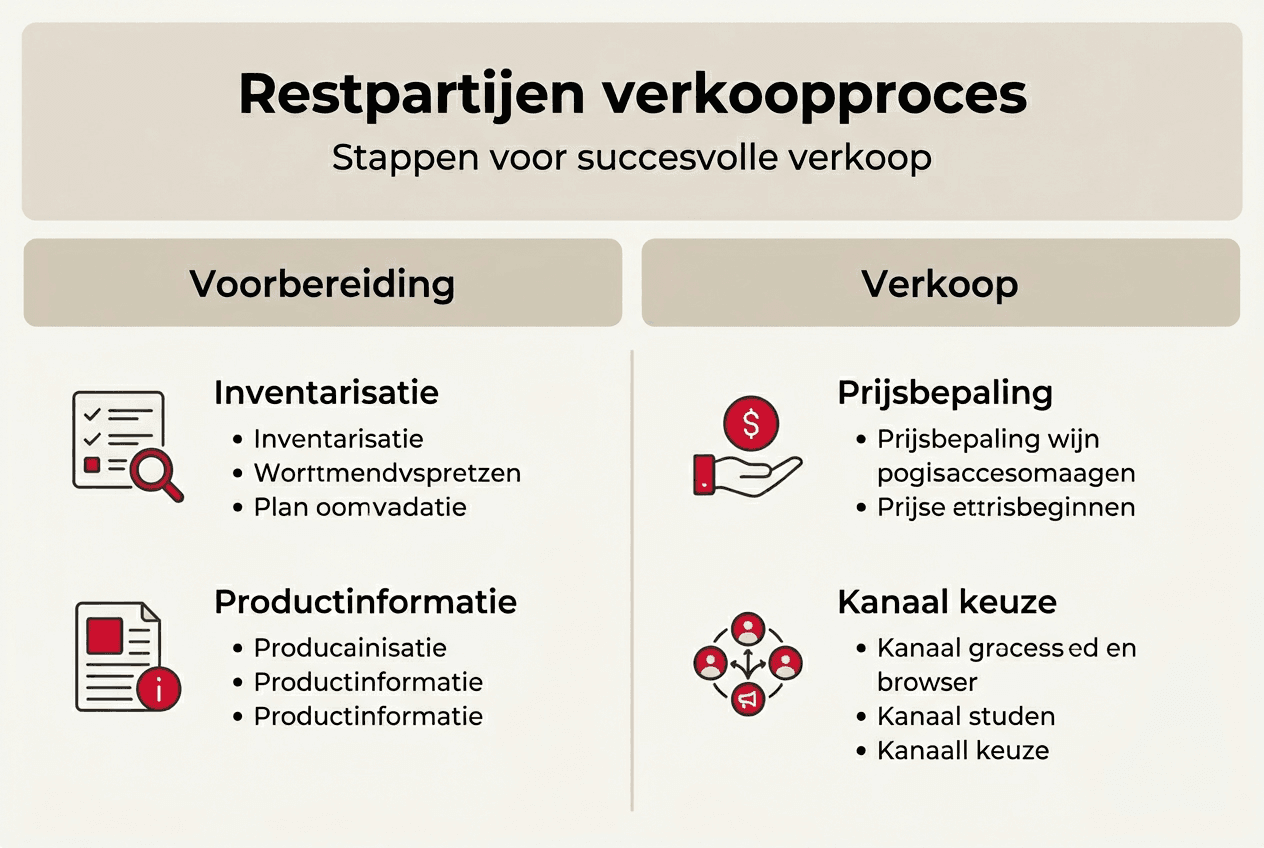
Step 3: Choose marketing channels
Select sales channels that suit your product type and target audience. Online B2B platforms effectively reach international wholesalers and webshops. Direct contacts with regular buyers offer speed and certainty but potentially lower prices. Auctions create competition but require more time. Consider a mixed strategy where you sell premium items through selective channels and bulk quantities through wholesalers. Comprehensive guide to residual stock helps you find the right balance.
Step 4: Organise order processing and logistics
Streamline your fulfillment process for efficient handling. Prepare shipping-ready pallets with clear labelling. Organise transport options for various order sizes, from parcel services to lorries. Communicate delivery times realistically and build in buffers for unexpected delays. Ensure tracking capabilities that both you and the buyer can monitor. Good logistics prevent disputes and increase repeat purchases.
Step 5: Arrange legal documents and guarantees
Finalise all contractual aspects before goods are dispatched. Establish clear terms and conditions of sale that define liability. Specify warranties, or the explicit lack thereof, for residual stock. Ensure buyers understand and accept EU regulations concerning product liability. Use standard, legally vetted contracts. Retain all communication and agreements for a minimum of seven years.
| Sales channel | Average selling time | Typical price realisation | Best for |
|---|---|---|---|
| Direct wholesale | 1-2 weeks | 25-40% retail | Bulk lots, quick liquidation |
| Online B2B platforms | 2–6 weeks | 35-55% retail | Diverse products, international reach |
| Auctions | 1-4 weeks | 30-60% retail | Unique items, competitive market |
| Regular customers | 3-7 days | 20-35% retail | Regular flow, reliable sales |
Pro-tip: Create a sales playbook with templates for quotes, contracts, and communication. This saves time on every transaction and ensures professional consistency that buyers appreciate. Update the playbook quarterly based on lessons learned.
The sales process doesn't end with dispatch. Systematic verification and aftercare transform one-off transactions into lasting relationships and improve future outcomes.
Monitor sales results against your original objectives. Analyse which product categories delivered the best margins and which channels were most effective. Track your average sales time per category and identify bottlenecks. Compare realised prices with your initial estimates to refine your valuation process. This data forms the basis for smarter decisions on future batches.
Customer satisfaction determines your reputation and future opportunities. Actively ask for feedback on product condition, communication, and the delivery process. Resolve complaints proactively before they escalate. A satisfied buyer becomes a returning customer or recommends you within their network. In the relatively small world of clearance stock, reputation is worth its weight in gold.
Common mistakes and prevention:
You minimise legal risks by strictly adhering to compliance and product liability within the EU. Regularly update your knowledge on changing regulations. Collaborate with legal advisors specialising in commercial law. Insure yourself against liability claims that may arise despite precautionary measures. Prevention costs less than resolving legal disputes afterwards.
Optimise your stock management based on sales data. Identify which product types sell quickly and which take up space for a long time. Adjust your Purchasing strategies for residual batches to better align future stock with market demand. Implement a first-in, first-out system to prevent obsolescence. Efficient inventory management increases your cash flow and reduces storage costs.
Returns processes require clear procedures. Define the conditions under which returns will be accepted. Who will bear the transport costs? Within what timeframe must the buyer notify? How will refunds be handled? Transparent return conditions prevent disputes. Analyse return reasons to improve product descriptions or quality controls. Learn from each return to prevent recurrence.
“Successful residual stock trading is about systematic processes and continuous improvement. Every sale teaches you something new about market dynamics and customer preferences. Use that knowledge to make your next transaction even more effective.”
Implement a dashboard to track key performance indicators. Monitor metrics such as average sales time, profit margin per category, return rate, and customer satisfaction score. Set quarterly goals and systematically evaluate performance. This data-driven approach will reveal improvement opportunities that would otherwise remain hidden. Involve your team in the analysis to leverage collective wisdom.
Build relationships with reliable supply chain partners. Develop a network of carriers, buyers, and legal advisors. These contacts will speed up future transactions and provide solutions to challenges. In the less risky residual market, strong relationships are often the difference between average and excellent results.
Having gone through this complete sales process, you will understand the complexity and opportunities within remaining stock. Kooistra has been supporting retailers and wholesalers with expertise since 1979, minimising risks and maximising profitability. Our 15,000 m² warehouse offers direct access to diverse product categories at competitive prices.
Navigating the remainder market with less risk requires knowledge and experience. We offer transparent processes, fast processing, and immediate payment. Whether you want to sell off overstock or buy at a bargain, our role as a wholesale remainder dealer saves you up to 50 percent on purchasing costs. Discover our extensive range, including attractive mixed pallets with residual stock for various applications. Contact us for personalised advice for your specific situation.
You must comply with EU product liability, safety standards, and correct labelling. Keep all certificates and test results for a minimum of seven years. Establish clear terms of sale that explicitly define warranties and liability.
Base prices on market research of comparable parties via different channels. Calculate your minimum price including all costs. For a quick sale, choose 20 to 40 percent of retail value, for maximum yield 50 to 70 percent with a longer selling time.
Online B2B platforms reach international buyers and achieve 35 to 55 percent of retail prices. Direct wholesale contacts offer speed with 25 to 40 percent realisation. Auctions create competition but require more time. Choose based on your product type and urgency.
Ensure products comply with all relevant EU regulations before selling. Document any defects transparently in product descriptions. Take out liability insurance and work with legally verified contracts. Regularly update your knowledge on changing legislation.
Define clear return conditions, including timescales and responsibility for costs. Invest in accurate product descriptions to manage expectations. Respond to complaints within 24 hours and resolve issues proactively. Analyse return reasons to implement future improvements.

After evaluating your offer, you will receive an immediate offer. We are flexible and proceed quickly. Bid - Pay - Collect.

We are the partner for reselling batches of goods outside your own sales market.

We are financially sound and we have the capacity to buy up sizeable consignments of goods.

We buy the whole lot and make no selection here. Large, small and mixed lots. We buy everything in the field of consumer goods!


