


Is your warehouse full of unsold stock that's blocking your cash flow? Excess inventory is a common problem for retailers and wholesalers. It ties up capital, costs storage space, and reduces profitability. This guide offers proven strategies to effectively sell your overstock. You'll learn practical steps for quality control, sales channels, and negotiation. Additionally, you'll discover how to prevent future excess stock with smart purchasing strategies. Increase your revenue and make space for new products.
| Punt | Details |
|---|---|
| Direct cash flow | Direct sales to professional buyers provide quick cash and prevent cash flow bottlenecks. |
| Quality control reduces risk | Systematic quality control reduces the risk of unsaleable batches and increases yield. |
| Cross-channel sales | A cross-channel approach increases reach and revenue by combining different channels. |
| Optimise procurement | Lean purchasing management prevents excess stock and reduces storage costs. |
| Wholesale benefits | Wholesalers can achieve significant cost savings by purchasing large quantities in one go. |
Successful sales start with thorough preparation. You need to know exactly what you have and in what condition it is. A systematic inventory gives you insight into quantities, product categories, and quality. This prevents disappointment during negotiations and ensures realistic price expectations.
Quality control is essential for profitable sales. Systematic quality control reduces risk by 40% When selling surplus stock, check packaging for damage, test functionality where possible, and sort products into categories. A-grade items fetch the highest prices, while B and C-grade items are sold for lower amounts.
Start your inventory with these practical steps. Create an Excel or software file with product name, quantity, condition, and original purchase price. Photograph representative items per category for potential buyers. Group items by product type, season, and condition. This structure will significantly speed up the sales process.
Pro-tip: Invest time in separating A, B, and C quality stock. This prevents high-value items from being undervalued in bulk sales and maximises your total return per batch.
Effective quality control requires specific supplies. Ensure there is enough space to spread out and inspect items. Use checklists per product category with specific checkpoints. Involve multiple team members to ensure objectivity and avoid blind spots.
The impact of good preparation is immediately reflected in negotiation results. Purchasers value transparency and pay higher prices for well-documented batches. It also saves you time as fewer questions and discussions arise during the sales process.
| Preparation phase | Time investment | Yield improvement |
|---|---|---|
| Basic inventory | 2-4 hours | 15-20% higher price |
| Quality control | 4-8 hours | 25-40% better deal |
| Photo documentation | 1-2 hours | Faster sale |
| Categorisation | 2-3 hours | Wider buyer group |
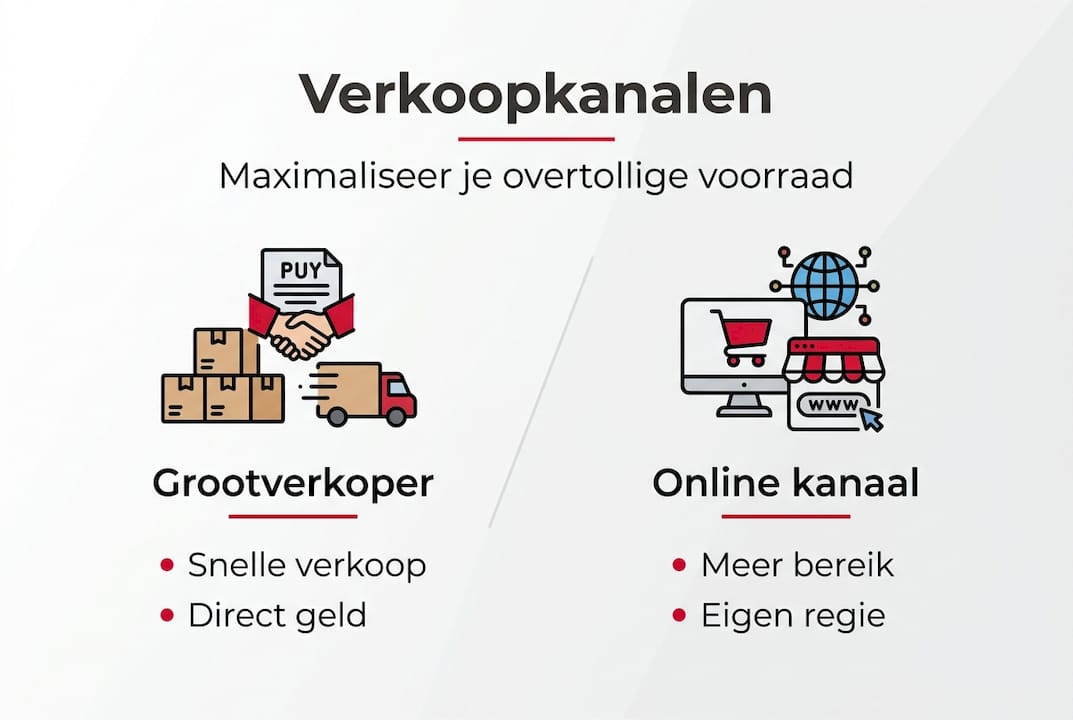
Following thorough preparation, you choose the right sales channels. Different channels offer specific advantages depending on your situation. Direct sales to professional Buyers of clearance stock delivers rapid cash flow and complete peace of mind. Online marketplaces reach international buyers but require more time and effort.
Wholesalers such as Kooistra.com buy large quantities at once. This eliminates logistical complexity and offers immediate payment. Discount retailers are interested in branded article overstock at sharp prices. Liquidators specialise in seasonal products and bankruptcy stock. Each channel has its own pros and cons that you need to weigh up.

Cross-channel strategies maximise reach and revenue Considerable excess stock. For example, combine direct sales of high-value items with bulk sales of lower-quality goods. Use online platforms for niche items and wholesalers for bulk lots. This approach optimises both price and speed.
Pro-tip: Begin met een professionele Retail stock buyer for your main party and use online channels for remaining niche articles. This combines speed with maximum yield.
The selection of sales channels follows a logical order. Start by taking stock of your inventory and determining the urgency. If there's an acute cash flow need, opt for immediate buy-out. If you have more time, combine channels for better prices. Also consider seasonal influences and the product lifecycle when making your choice.
| Sales channel | Speed | Price | Convenience | Best for |
|---|---|---|---|---|
| Professional buyers | Very fast | Reasonable | Very high | Bulk deliveries |
| Online marketplaces | Average | High | Low | Niche article |
| Wholesalers | Fast | Average | High | Large volumes |
| Discount retailers | Average | Low-medium | Average | Branded item |
| Liquidators | Fast | Low | High | Seasonal produce |
With the right channels selected, the actual sales process follows. A structured approach saves time and maximises results. Direct sales offer fast cash flow Payment within days for surplus stock. Begin preparing a professional inventory list including photos and specifications.
You can quickly get in touch with reliable buyers via their website or by phone. Send your inventory list and request an indicative price quotation. Professional parties usually respond within 24 hours. Compare at least three quotes to sell at market rate. Pay attention to the payment terms and transport arrangements in the quote.
Price determination requires market knowledge and realism. Research what similar batches fetch via clearance buyers. Calculate your minimum price based on purchase value minus storage costs and opportunity costs. Accept that excess stock will always be sold below purchase price. Focus on cash flow and space gained rather than loss minimisation.
Negotiating is about creating mutual benefit. Show understanding for the buyer's position and their risks. Offer flexibility in delivery times or payment terms for better prices. Bundle less attractive items with popular ones for total deals. Build relationships for future collaboration.
Pro-tip: Document all communication and agreements in writing. This prevents misunderstandings and offers legal certainty. Use standard purchase agreements that clearly regulate the transfer of ownership, payment, and liability.
The advantages of professional purchase go beyond just fast payment. You save on marketing costs, prevent further depreciation, and eliminate return risks. Professional buyers often also handle logistics. This results in complete peace of mind and a direct focus on your core business.
Time saving is an underestimated advantage of direct selling. Selling yourself through online channels costs an average of 15-20 hours per week on administration, communication and shipping. With bulk sales to buyers, you only invest a few hours in preparation and handover. This time is better spent on profitable core activities.
Prevention is more effective than cure. Structural improvements in inventory management will significantly reduce future overstock. XXL Nutrition verlaagde voorraadniveau met 30% via optimised procurement software, which prevents excess stock. Modern systems analyse sales data and predict demand more accurately than manual methods.
Data analysis identifies patterns in seasonal influences, trends, and customer behaviour. Use historical sales data to optimise purchasing volumes. Establish safety stock per item based on lead times and sales velocity. Automate reorder points to prevent stockouts as well as overstock.
Procurement software integrates with your sales channels and predicts demand in real-time. This prevents impulse purchases and emotional purchasing decisions. Systems such as Optiply or TradeGecko offer specific functionality for wholesalers and retailers. The investment pays for itself through lower inventory costs and better cash flow.
Pro-tip: Start small with one product category as a pilot for new inventory management systems. Measure results over three months and then scale successful policy to other categories. This minimises risk and increases acceptance.
The impact of improved inventory management extends across multiple business aspects. Lower inventory levels reduce storage costs and capital tied up. Better availability increases customer satisfaction and revenue. Fewer markdowns and clearance sales protect your margins. These benefits cumulatively lead to substantial profit improvements.
| Measure | Implementation time | Stock reduction | Cost advantage |
|---|---|---|---|
| Procurement software | 1-3 months | 20-35% | £15,000-£50,000 per year |
| Data analysis | Continuous | 10-15% | £8,000-£20,000/year |
| Purchasing policy | 2-4 weeks | 5-10% | €5,000-€15,000/year |
| Team training | 1-2 months | 8-12% | £7,000-£18,000 per year |
The Stock procurement checklist 2026 offers concrete tools for optimisation. Evaluate suppliers on reliability, flexibility and minimum order quantities. Negotiate return rights and consignment terms. Diversify your supplier base to reduce dependency. These strategic purchasing decisions prevent structural surpluses.
Seasonal influences require specific attention in inventory planning. Build up stock for peak periods but avoid early purchasing of seasonal items. Use pre-orders and just-in-time delivery where possible. Plan proactive price reductions at the end of seasons to minimise residual stock for the next cycle.
After all the strategies and tips, professional support is available. surplus stock buy-back system from Kooistra.com offers complete outsourcing for retailers and wholesalers. Since 1979, the company has been purchasing large quantities of overstock, returned goods, and liquidation stock. With 15,000 m² of warehouse space and expertise in quality control, it guarantees Kooistra.com Fast processing and immediate payment.
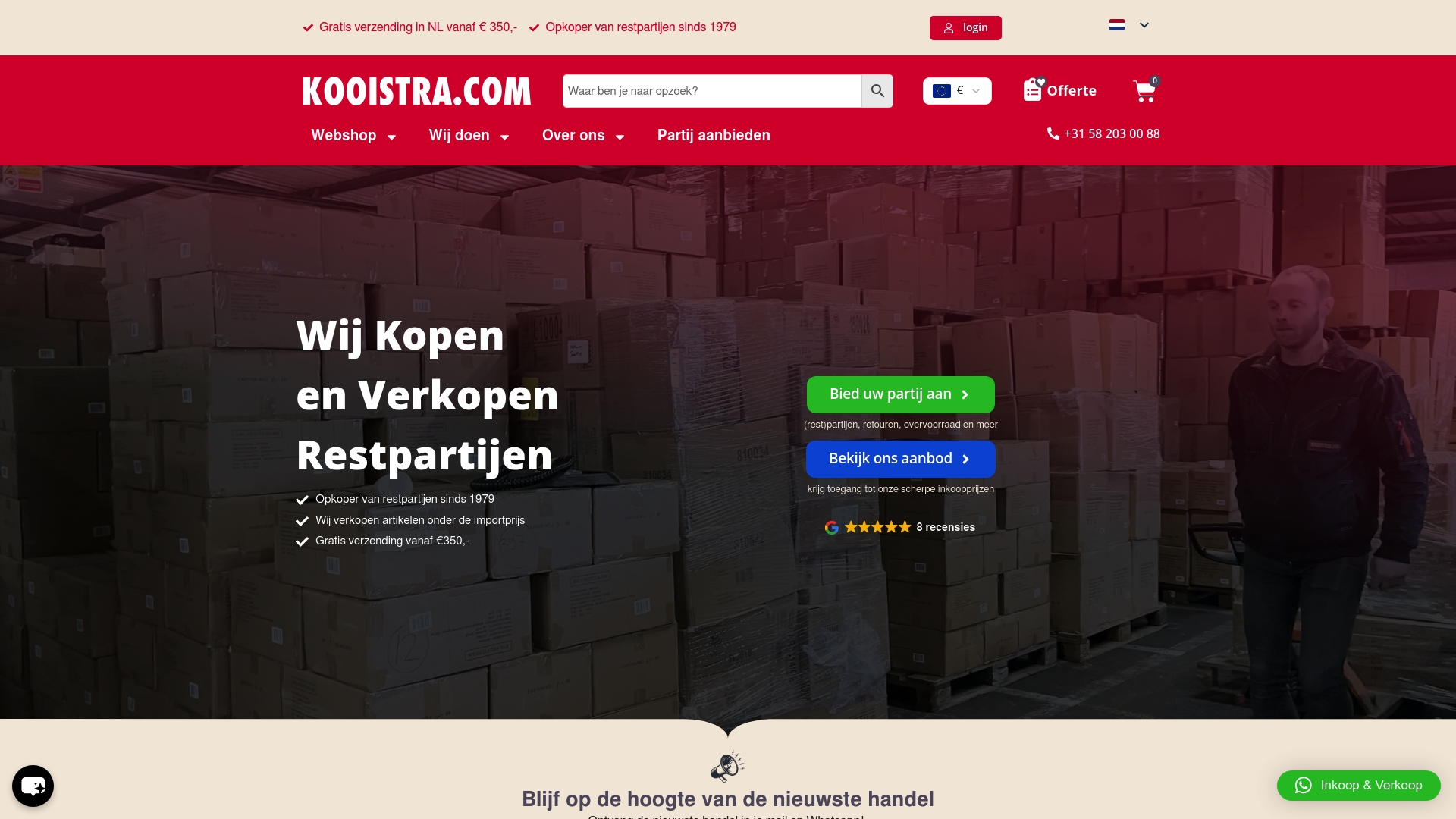
The Role of wholesale in surplus stock delivers substantial savings for sellers. Professional buyers assess your inventory objectively and offer market-driven prices. You save time, prevent further depreciation, and create immediate cash flow. Kooistra.com organises regular showroom visits and events where you can personally get acquainted with their working methods. The combination of experience, capacity, and reliability makes them an ideal partner for handling excess stock.
Remainder lots encompass various categories such as returns, bankruptcy stock, and damaged packaging. Overstock specifically refers to new stock that was not sold within the planned period. Both require quick sales, but overstock often has higher quality and better sales value.
Professional buyers such as Kooistra.com Payment within 24 to 72 hours after approval and transfer. Some parties even offer immediate payment upon collection. Speed depends on party size, documentation, and logistical arrangements. Ensure a complete inventory list to expedite the process.
Quality control reduces the risk of unsellable items by 40%and increases selling prices by 25-40% . You avoid disputes with buyers and build a reputation for future deals. Inspected batches sell faster as buyers trust product descriptions.
Analyse urgency, product type and available time. For acute cash flow needs, opt for professional buyers for bulk sales. If you have more time, combine wholesale for volume with online platforms for niche items. Branded items sell well via discount retailers, while seasonal products are suitable for liquidators.
Implement procurement software with demand forecasting and analyse sales data monthly. Establish maximum stock levels per item and create purchasing policies with approval processes. Train your team in data analysis and negotiate flexible terms with suppliers. XXL Nutrition reduced stock by 30% through this approach.
Expect 20-40% of original purchase value for A-grade overstock and 10-25% for B-grade. Seasonal and niche items often yield lower percentages. Professional buyers factor in risk, storage costs, and resale margins into their offers. Focus on total cash flow and space profit instead of loss minimisation.

After evaluating your offer, you will receive an immediate offer. We are flexible and proceed quickly. Bid - Pay - Collect.

We are the partner for reselling batches of goods outside your own sales market.

We are financially sound and we have the capacity to buy up sizeable consignments of goods.

We buy the whole lot and make no selection here. Large, small and mixed lots. We buy everything in the field of consumer goods!


