


Spacious 30% of the shop stock is at any point considered redundant, and that directly costs you money, space, and cash flow. Retailers and wholesalers who manage excess stock smartly increasingly rely on specialised purchasers. Not as a last resort, but as a strategic part of their inventory management. In this article, you will learn what stock management by purchasers entails, how the process works, which risks you need to be aware of, and which strategies yield the most.
| Punt | Details |
|---|---|
| Direct liquidity and space | Stock management with buyers quickly ensures cash flow and space saving without a long sales process. |
| Prevent risk with good processes | A structured process prevents losses through clear agreements on quality and supply. |
| Preventive inventory management pays off | Use ABC analysis and software to prevent excess stock, not just clear it. |
| Buyers aren't always the best solution | Investigate alternatives such as discounts or donations and compare by profit and speed. |
Inventory management with bulk buyers means structurally and consciously selling off surplus stock to specialised parties who buy large quantities of goods. It goes beyond a one-off sale. It is a structured process of inventory, selection and negotiation that makes your inventory management healthier.
More and more retailers and wholesalers are opting for buy-back dealers because the market is moving faster than ever. Seasons change, trends shift, and consumers always expect new products. Do you want to know wat opkopers precies doen and how they work. Then you'll also understand why collaboration pays off.
The benefits at a glance:
“A specialist buyer doesn't just buy anything. They assess quality, market value, and saleability. That makes the process more professional than a simple clear-out.”
What makes a buyer a specialist is the combination of market knowledge, logistical capacity, and a broad network of buyers. They can process and resell large batches quickly, which directly benefits you as a retailer or wholesaler.
A good stock management process for bulk purchasers follows set steps. Those who tackle this in a structured way will get more value out of their surplus stock. In practice, the step-by-step plan from inventory to integration looks like this:
At the Selling surplus stock it's about speed and diligence. Those who wait too long lose value. Those who act too quickly without control risk disappointment.
The End-of-line sales process There are also pitfalls that can be avoided with the right preparation.
Pro-tip: When dealing with a new buyer, always send a small test batch first. This way, you can assess their processes, communication, and payment speed before selling larger volumes.
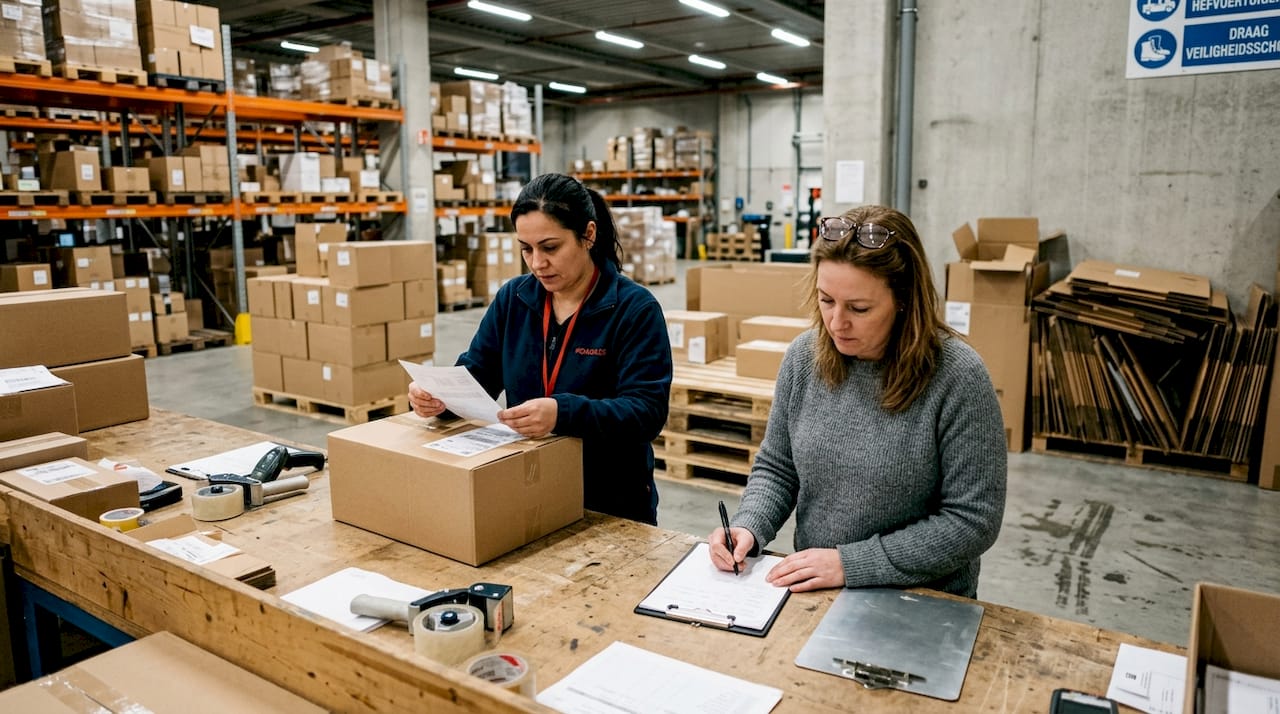
Not all surplus stock is the same. The type determines the sales strategy and the risk. Resellers process overproduction, returned goods, seasonal stock, and discontinued SKUs., each with its own risk profile.
| Stock type | Marketability | Risk | Average yield |
|---|---|---|---|
| Overproduction | High | Low | 40-60% of purchase price |
| Seasonal stock | Middle | Middle | 20-40% of purchase price |
| Return goods | Low to medium | High | 10-30% of purchase price |
| Discontinued products | Middle | Middle | 25-45% of purchase price |
At buy back goods Quality assessment plays a significant role. Damaged or incomplete products considerably reduce the price. Low stock is a separate category where products are hardly marketable via regular channels.
Common pitfalls of excess stock:
The benefits of buying up stock weigh heavily, but only if you properly assess the risks for each type of stock. Those who do this maintain control over their margins.
Prevention is better than cure. Those who structurally have too much stock should not just sell to scrap dealers but also address the root cause. Proactive inventory management begins with the right methods and tools.
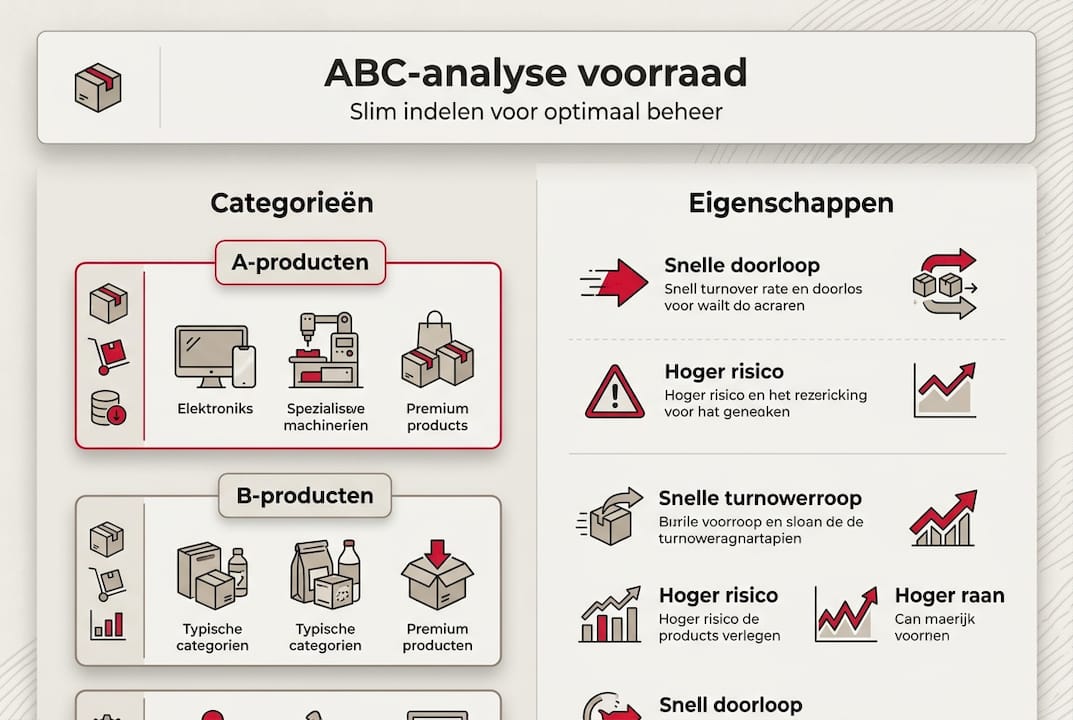
The ABC analysis is a tried and tested method 20% van je producten genereert 80% van je omzet. By dividing your range into A, B, and C categories, you know exactly where to purchase and where to be cautious. C products are the biggest source of excess stock.
Moderne voorraadbeheersoftware versterkt dit verder. Platforms zoals StockM, EazyStock en Slimstock helpen je met automatische herorderadviezen en vraagvoorspellingen. StockM rapporteert 30% voorraadreductie, 20% minder out-of-stock situaties en 50% geautomatiseerde processen bij gebruikers. Dat zijn geen kleine verbeteringen.
At Excess stock management It's about combining real-time data with historical sales patterns. This way, you order less in excess and maintain a healthy stock level.
| Key Performance Indicator | What it measures | Target value |
|---|---|---|
| Orbital velocity | How quickly stock sells | At least 4 times a year |
| Service level | Customer availability | 95-98% |
| Percentage of obsolete stock | Share of unsold inventory | Maximum 5% |
The stock purchasing checklist helps you ask the right questions before ordering for every purchasing decision.
Pro-tip: Combine real-time sales data with seasonal patterns from previous years. This way you can predict demand spikes and avoid being left with a mountain of unsellable products after the season.
Resellers aren't the only solution for excess stock. Alternatives include discounts, donations, returns, and prevention via software. Each has its own pros and cons.
| Strategy | Advantages | Disadvantages |
|---|---|---|
| Buyout | Fast cash flow, no marketing effort | Lower yield than direct sales |
| Discount offer | Higher margin per product | Time-consuming, uncertain outcome |
| Donation | Positive image, tax advantage | No direct return |
| Software prevention | Structurally less surplus stock | Investment and implementation time |
When do you choose which strategy?
More and more entrepreneurs are opting for a combination. They selling surplus stock to external buyers for quick liquidity and investing at the same time in better stock planning to prevent recurrence. That is the smartest approach.
The difference between profitable stock management and costly failure lies in the details. Quick sales generate immediate cash flow, but without good agreements, your margin will still evaporate.
Success factors for effective stock management at bulk purchasers:
Common mistakes:
Pro-tip: Always regulate contractual agreements on the maximum return percentage and the minimum quality standards. This way, you prevent one party from partially backing out afterwards with discussions about the price.
Do you want to benefit from smarter stock management yourself? Then there are immediate opportunities with a specialised buyer with decades of experience. Kooistra.com buys and sells large quantities of surplus stock since 1979, with a 15,000 m² warehouse and a broad network across Europe.
Whether you to buy remaining stock for your shop or wholesale business, or specifically to sell off your own surplus stock, Kooistra.com offers quick processing, direct payment, and competitive prices. No lengthy procedures, but businesslike and efficient. Take direct contact for a no-obligation appraisal of your stock and to discover what's possible.
A buyer offers quick liquidity and immediate space without extra marketing effort or prolonged loss of revenue. For large volumes or time pressure, this is almost always the faster and less labour-intensive choice.
Returns bring sales risk and lower margins due to potential damage or incomplete products. Always assess quality beforehand and establish minimum quality standards in the contract.
Prevention works best through ABC analysis, EOQ and inventory management software. These methods help you to structurally order less than you need and to better respond to demand fluctuations.
This varies by type of stock, but returns typically range between 10 and 60% of the purchase price. The big advantage is not only in the return, but also in the savings on storage and write-off costs.

After evaluating your offer, you will receive an immediate offer. We are flexible and proceed quickly. Bid - Pay - Collect.

We are the partner for reselling batches of goods outside your own sales market.

We are financially sound and we have the capacity to buy up sizeable consignments of goods.

We buy the whole lot and make no selection here. Large, small and mixed lots. We buy everything in the field of consumer goods!


